Computer People for Peace and the Pre-History of the Techlash
Source profile
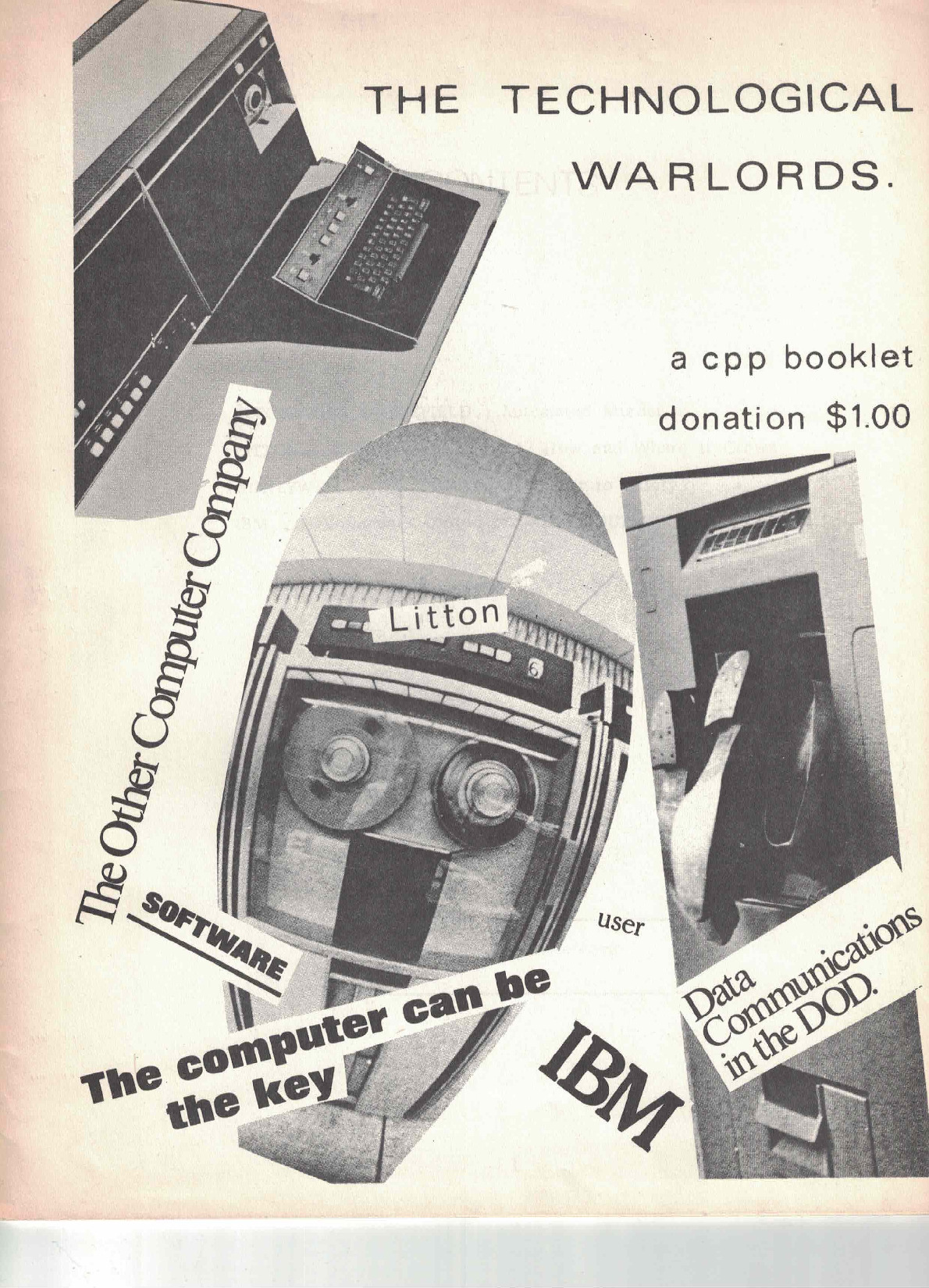
Computer People for Peace (CPP)Pamphlet »The Technological Warlords«, by Ann Rosenberg
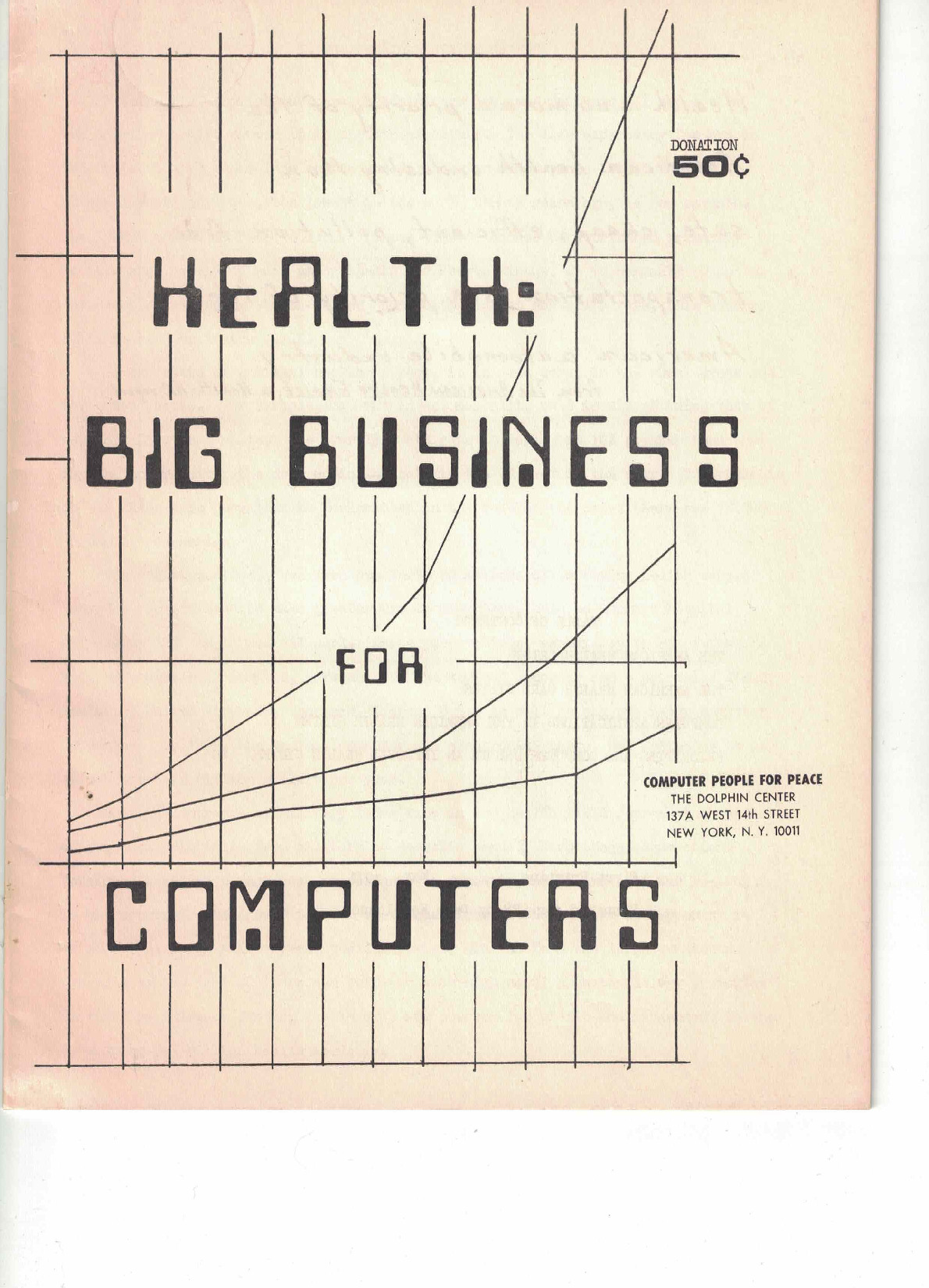
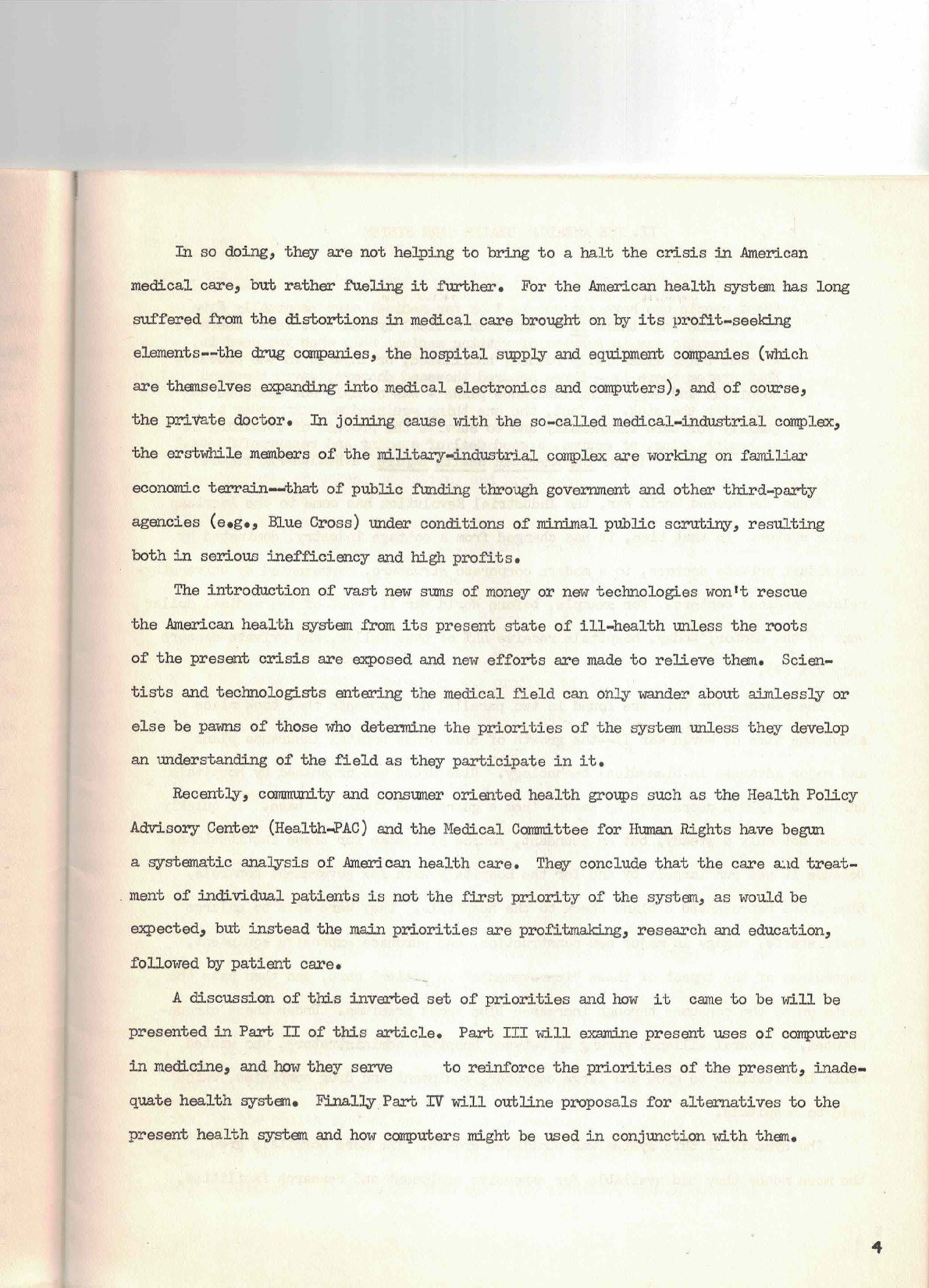
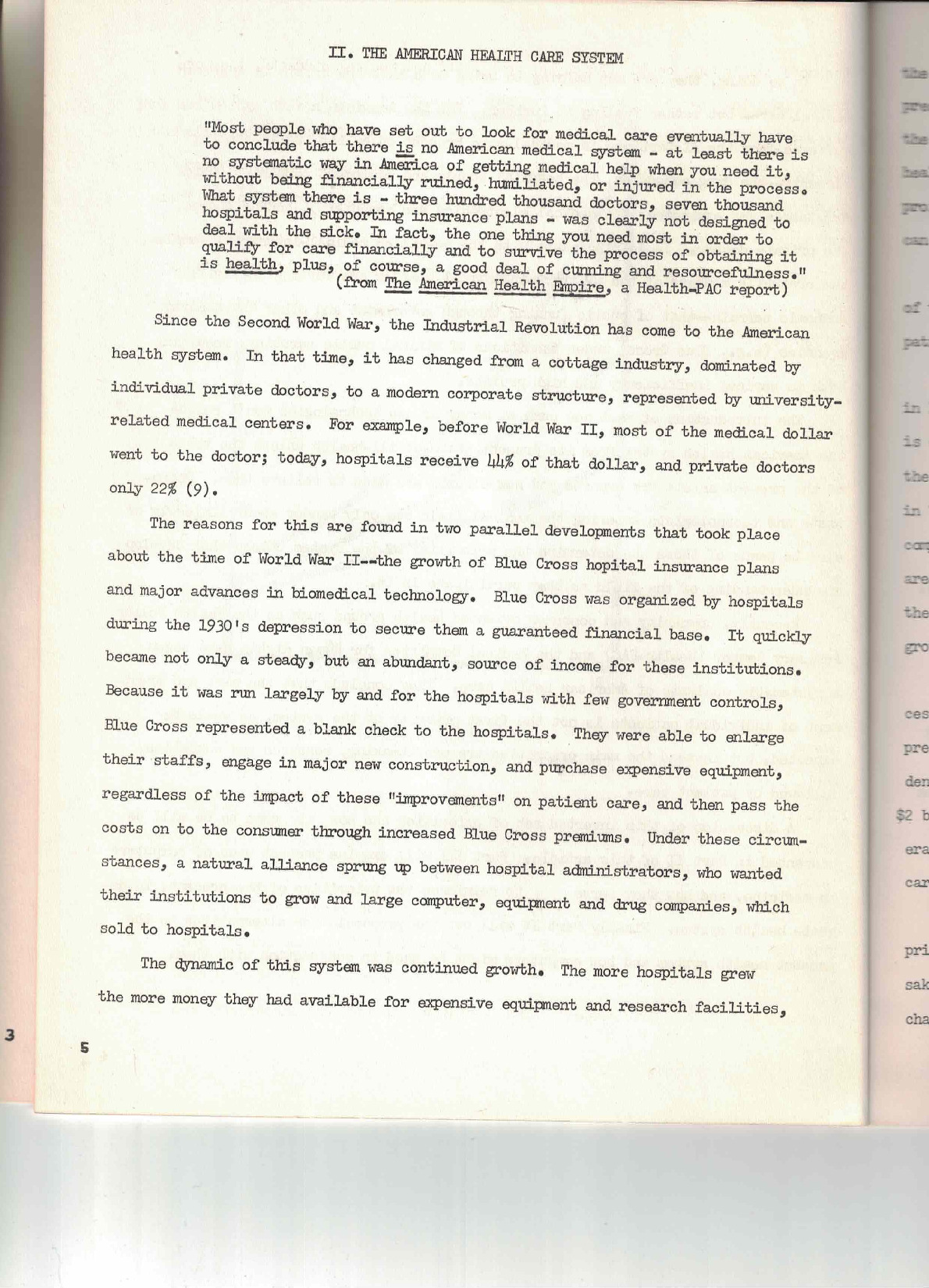
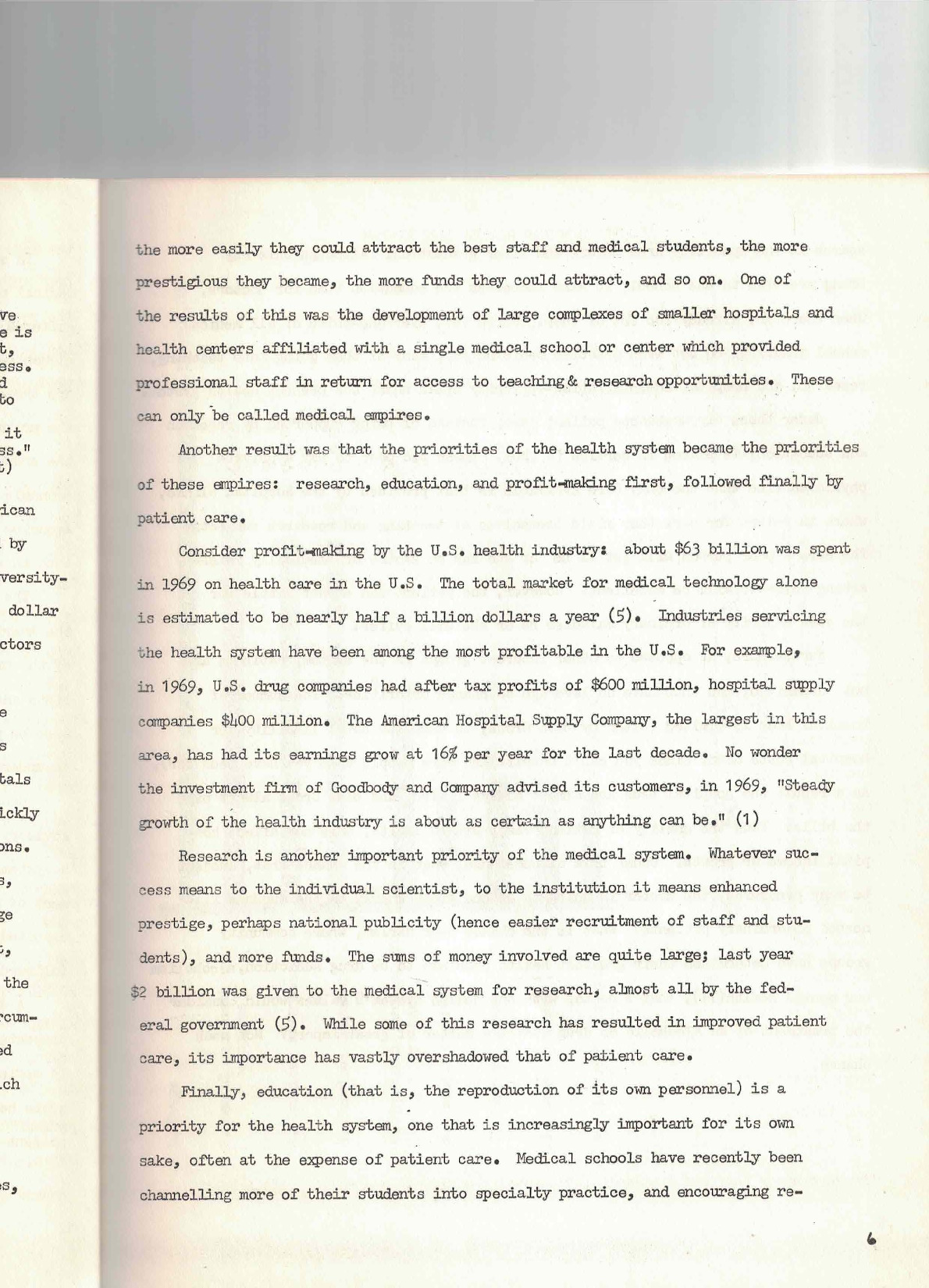
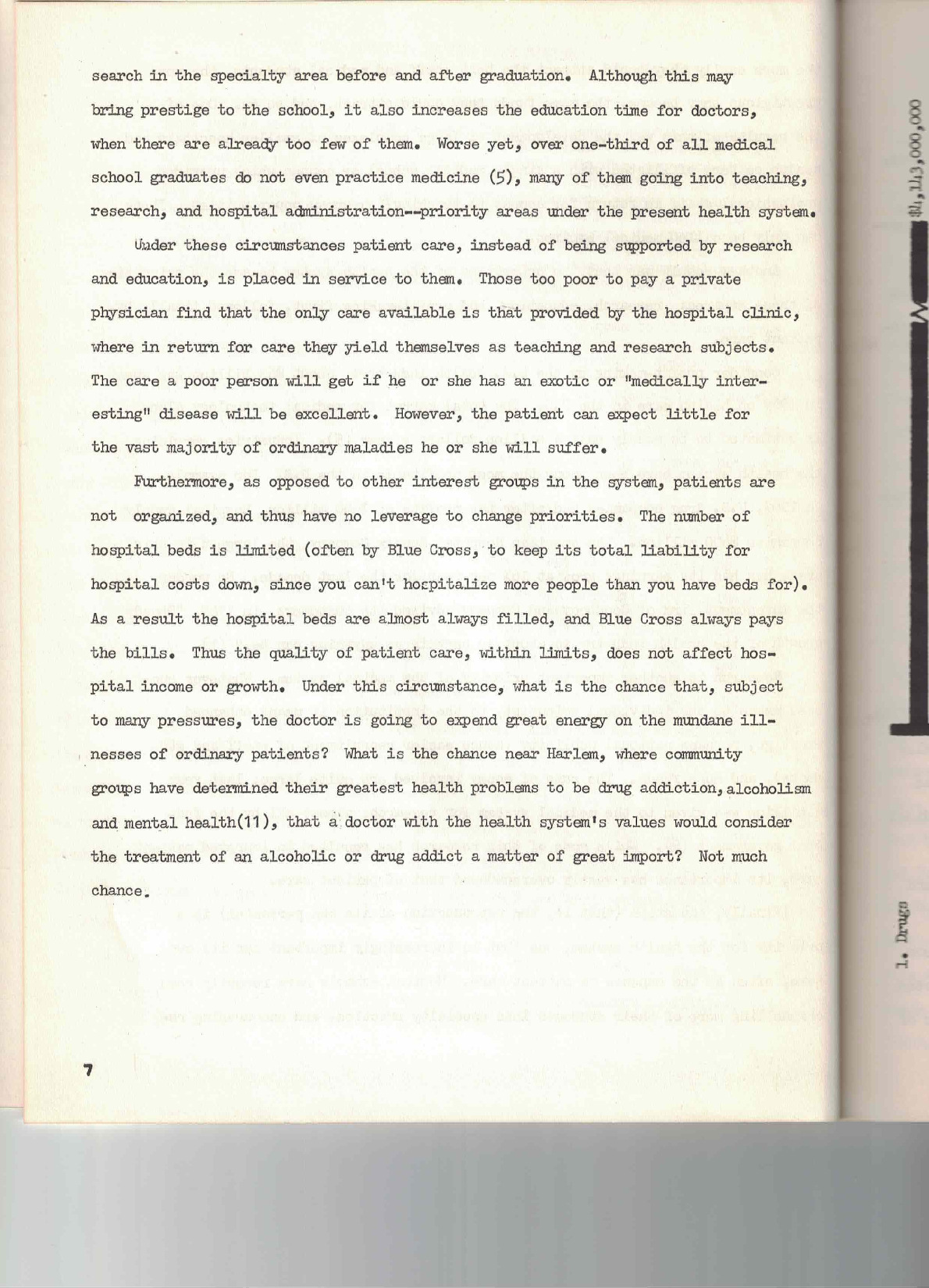
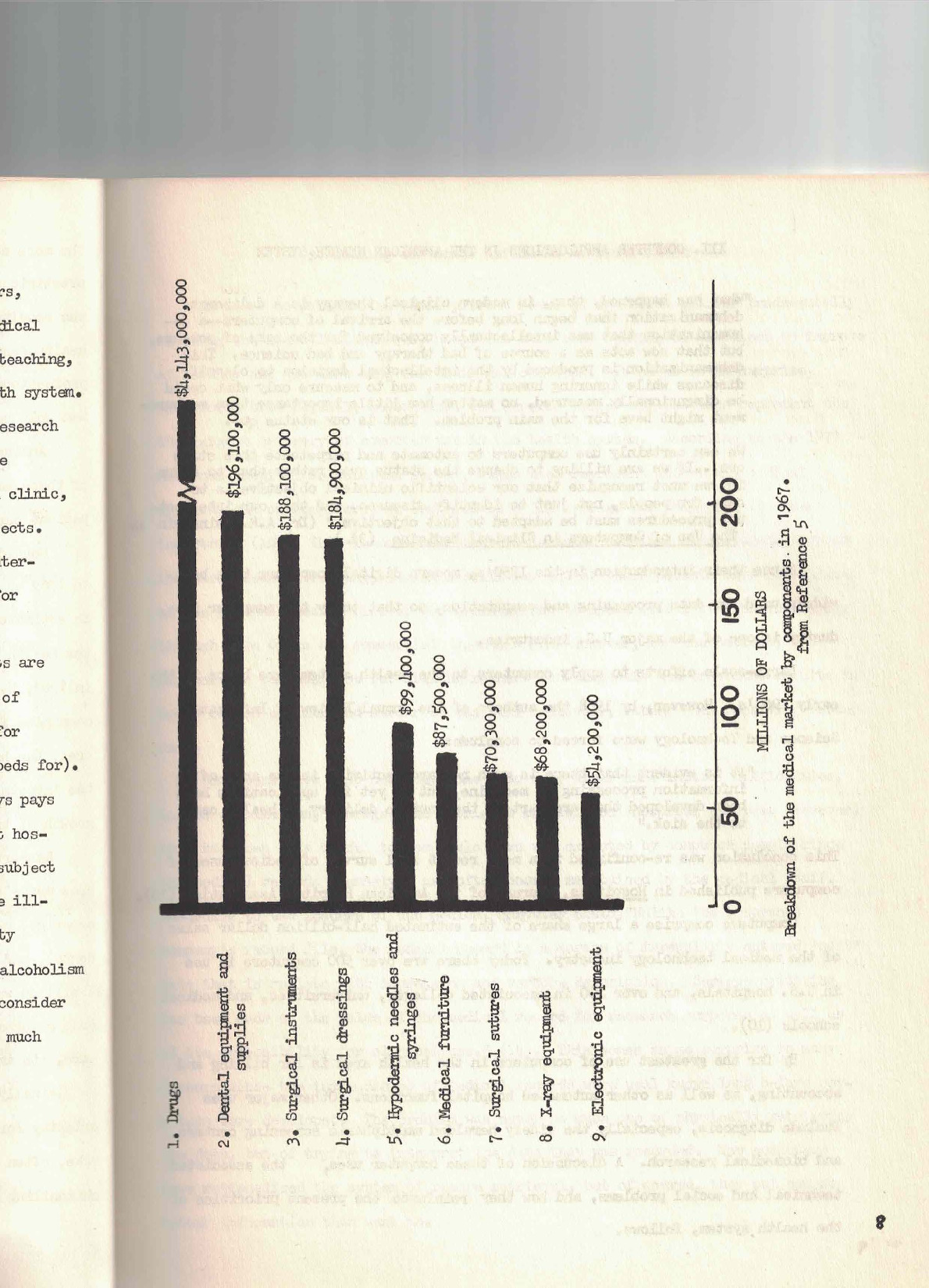
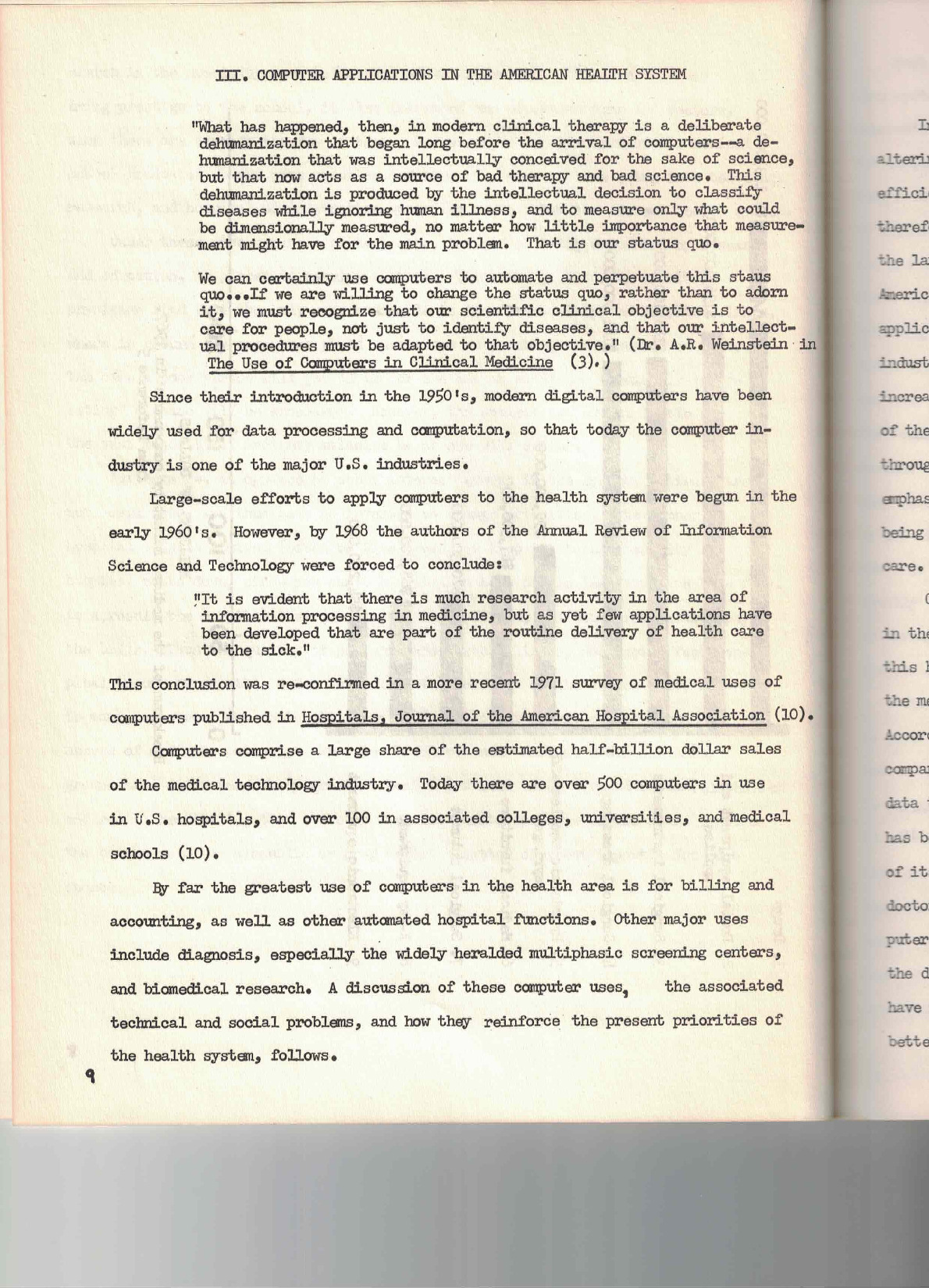
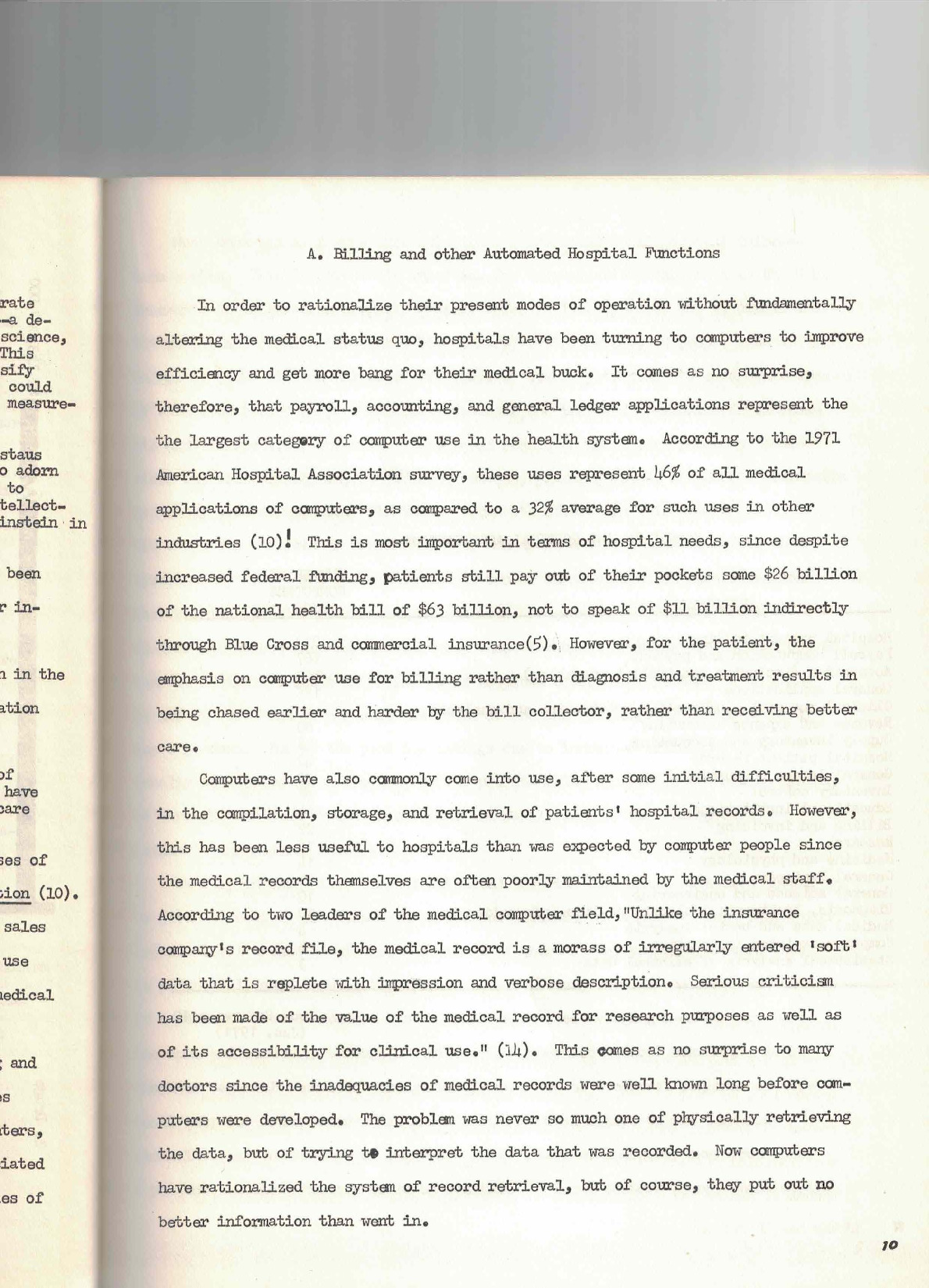
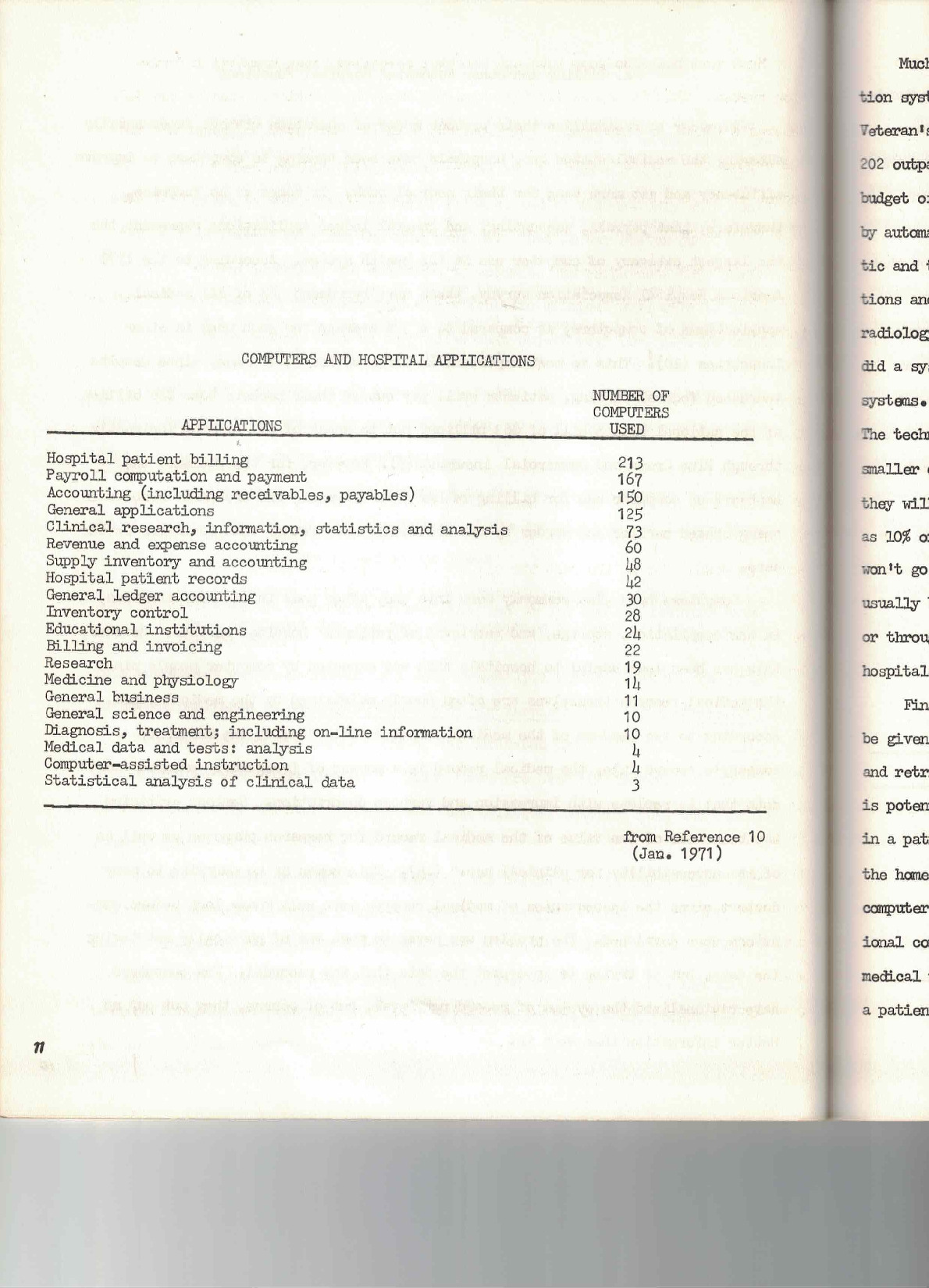
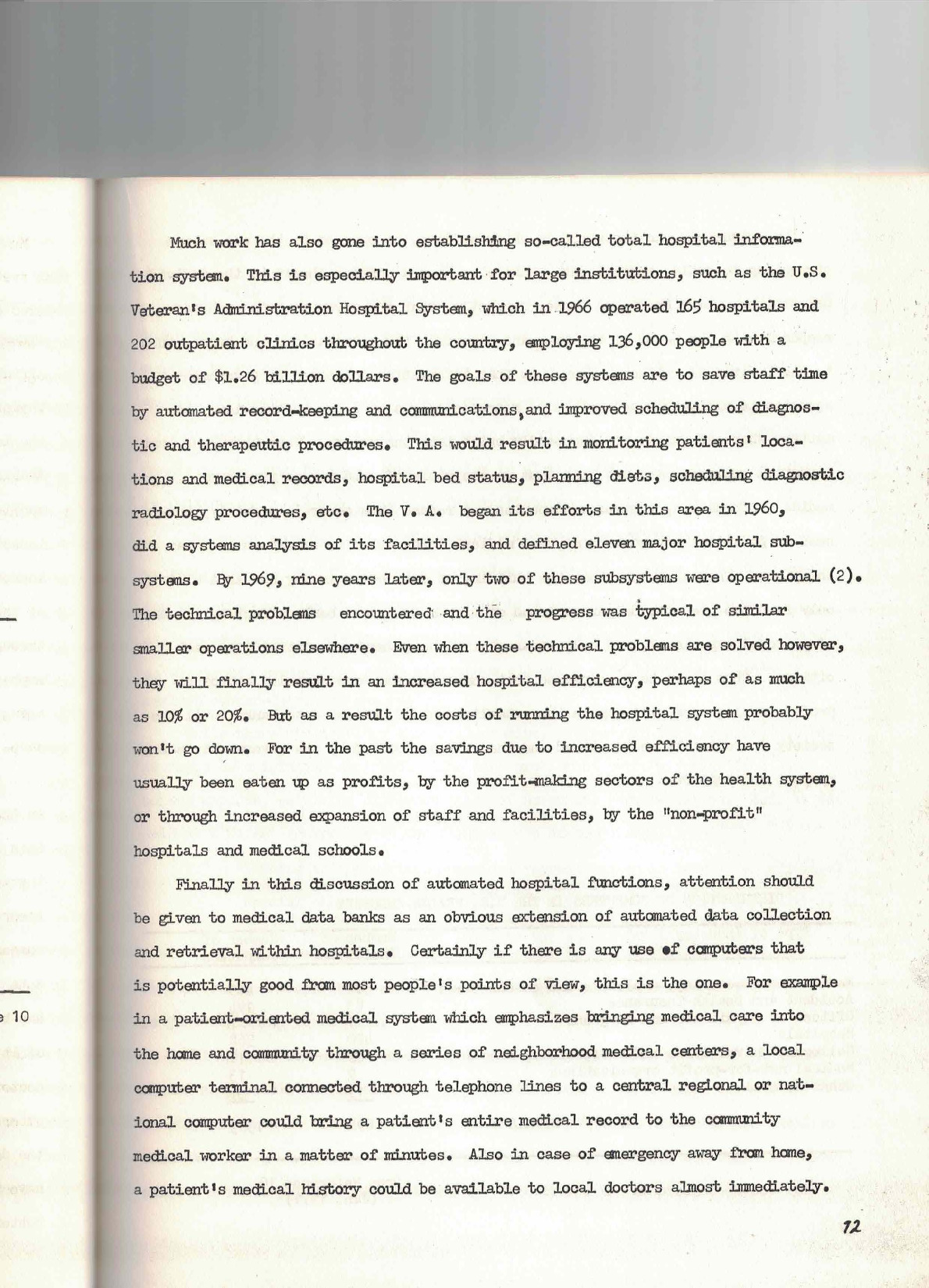
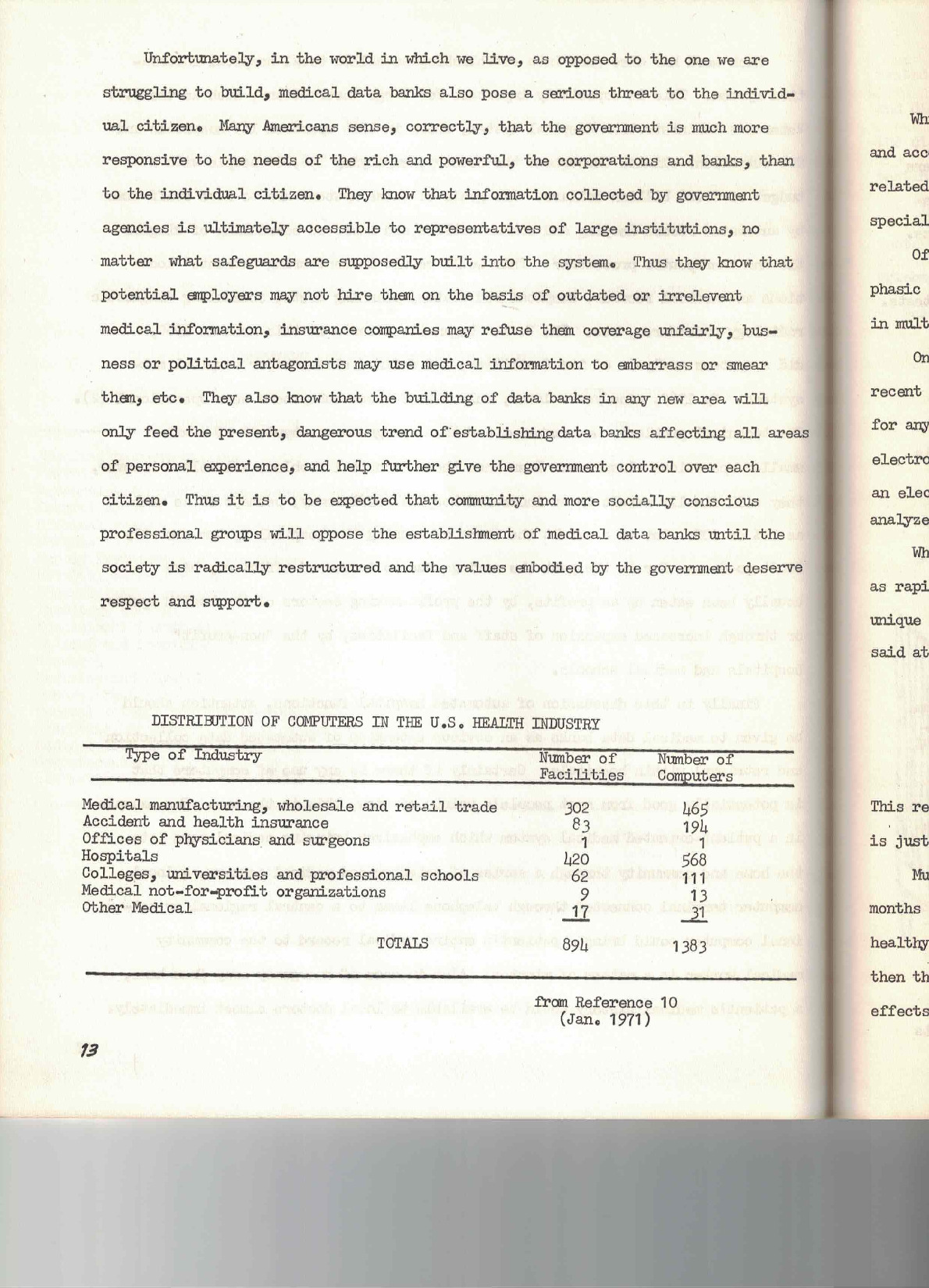
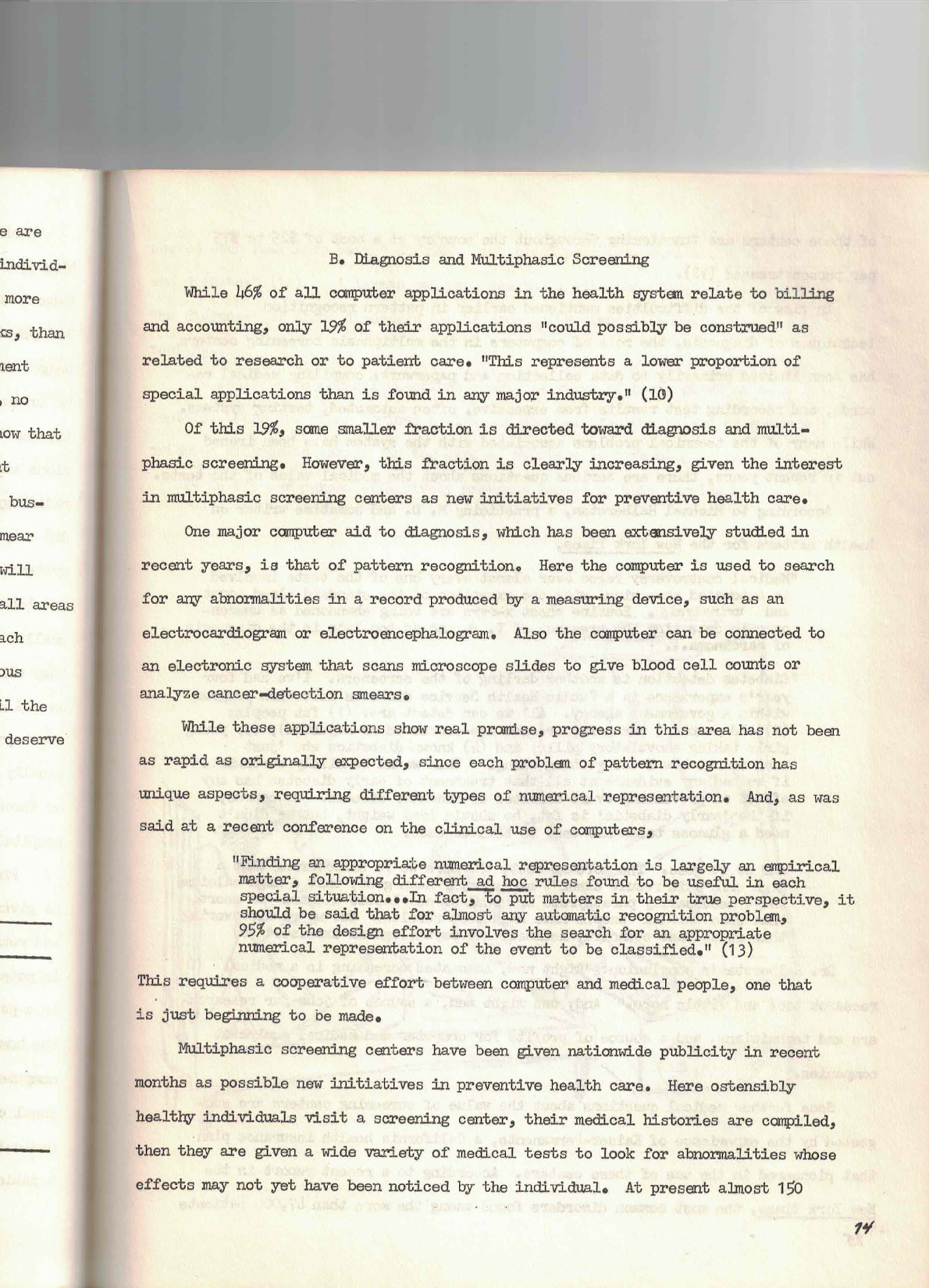
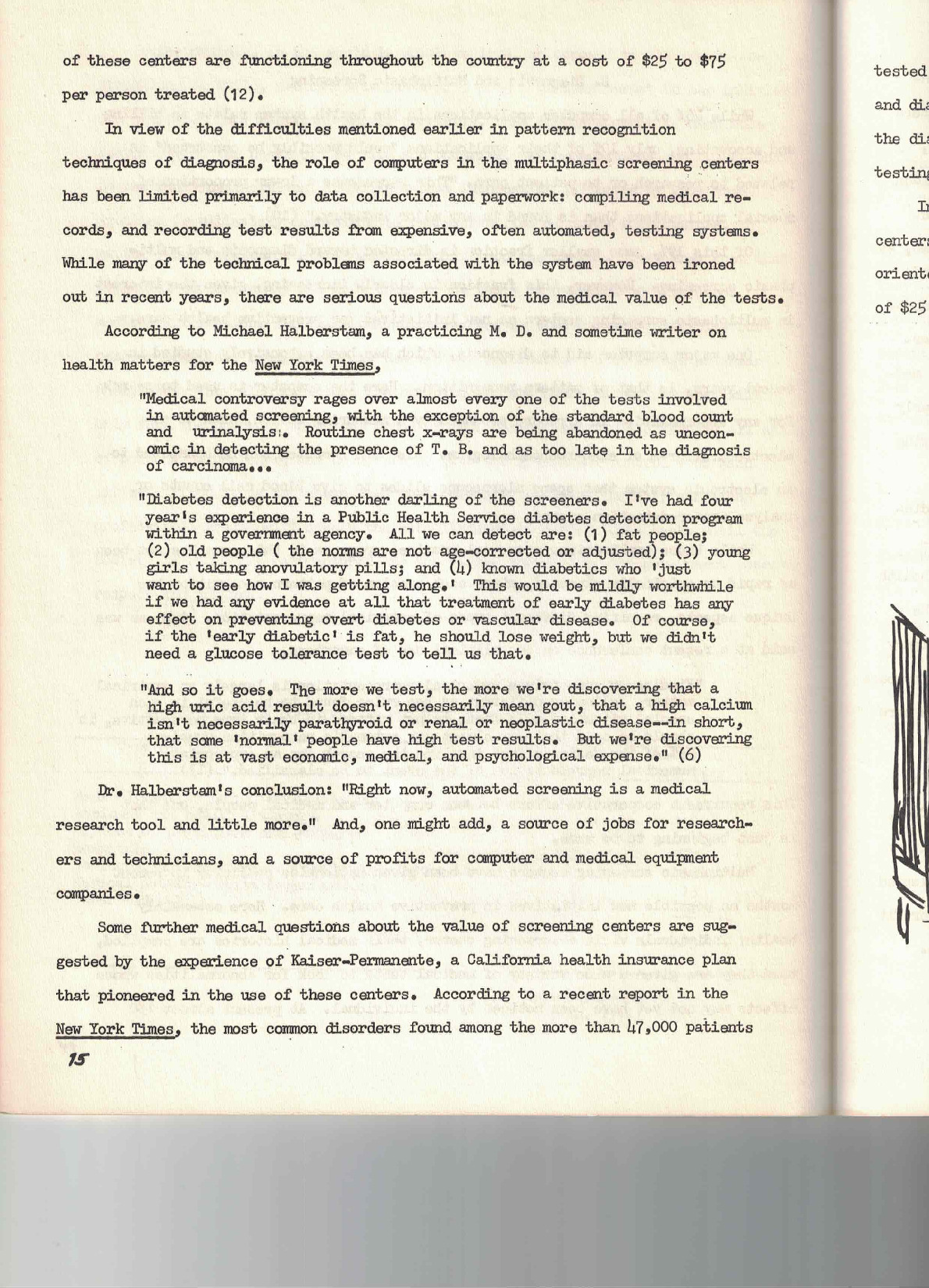
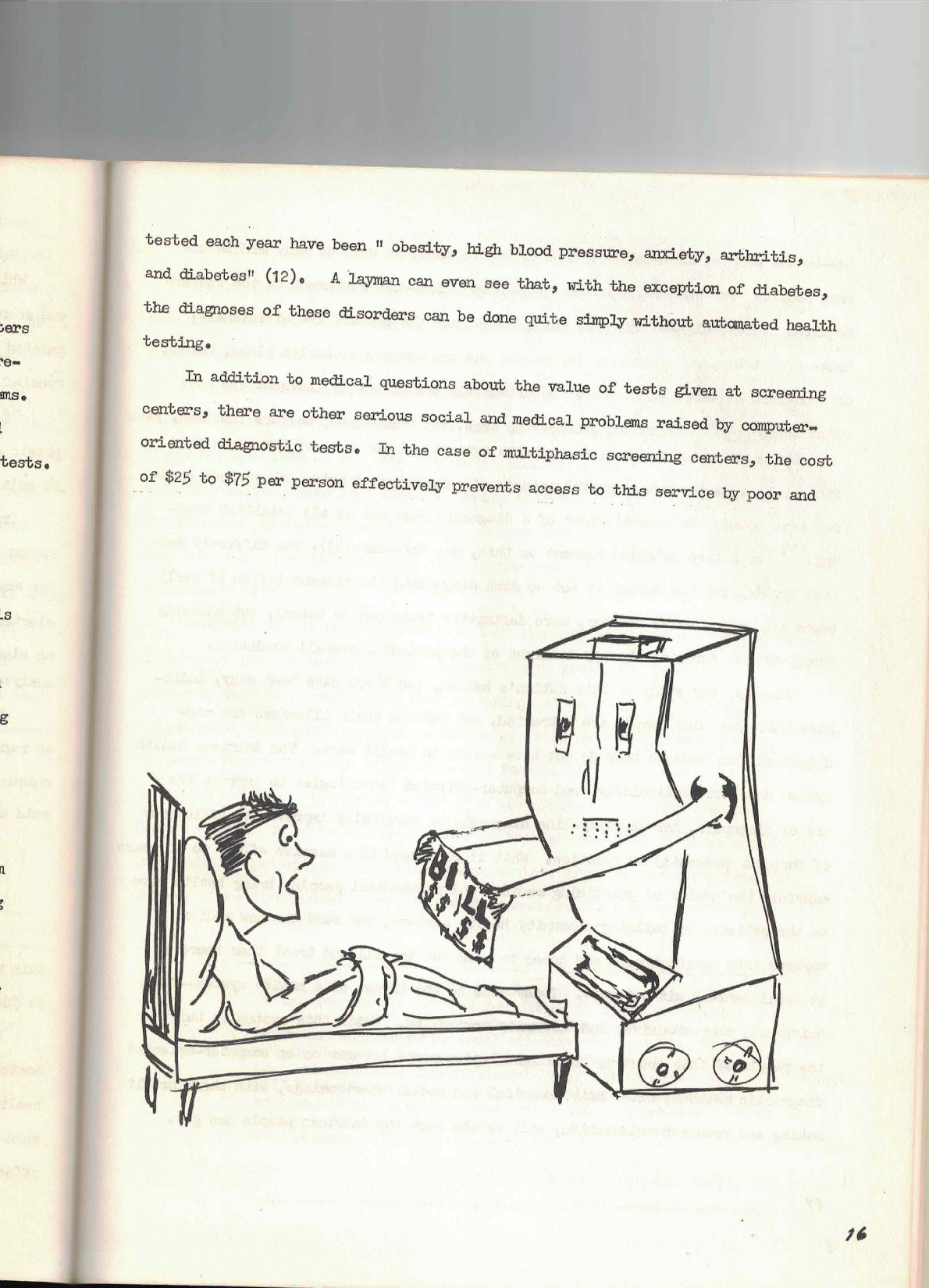
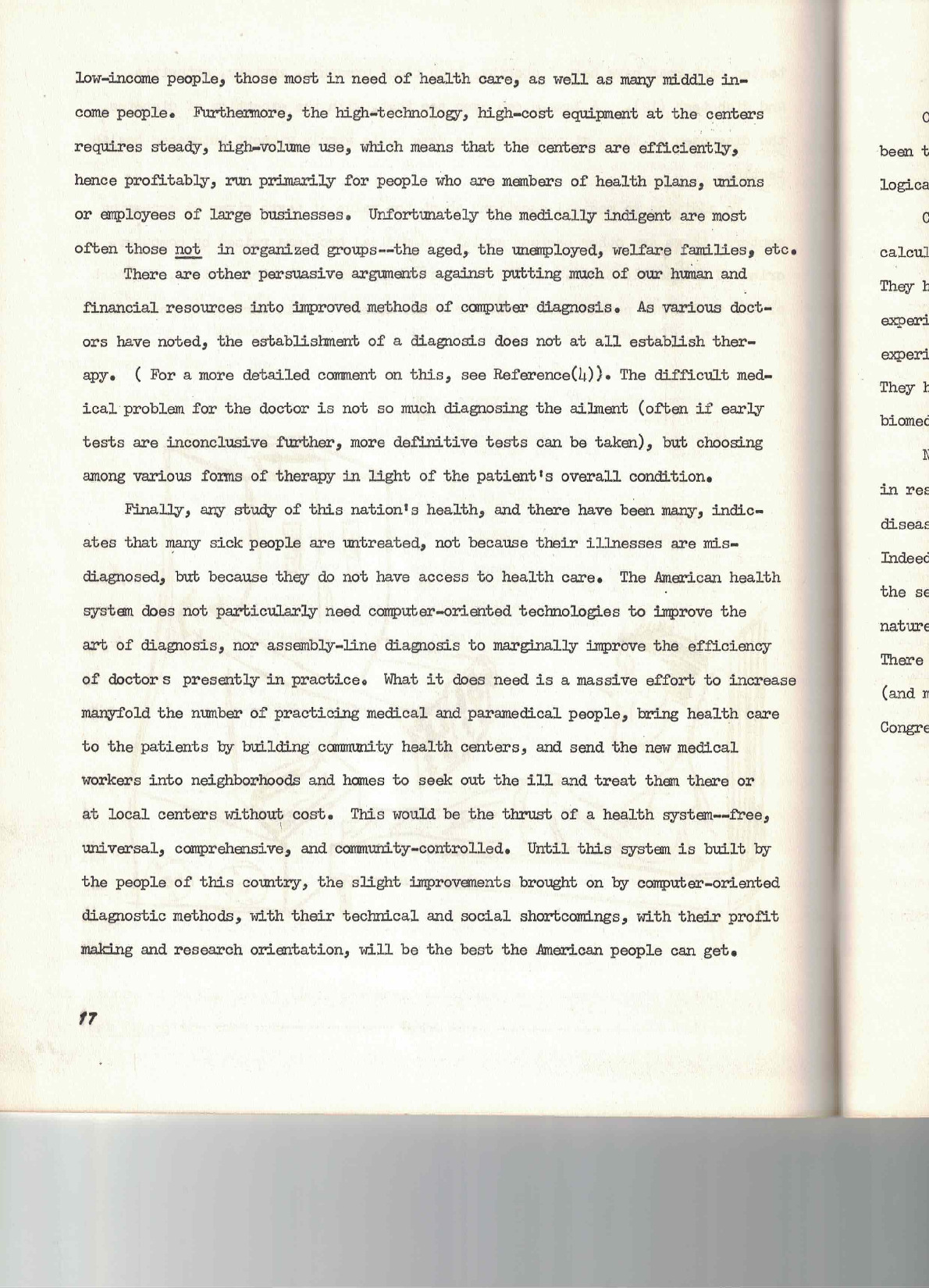
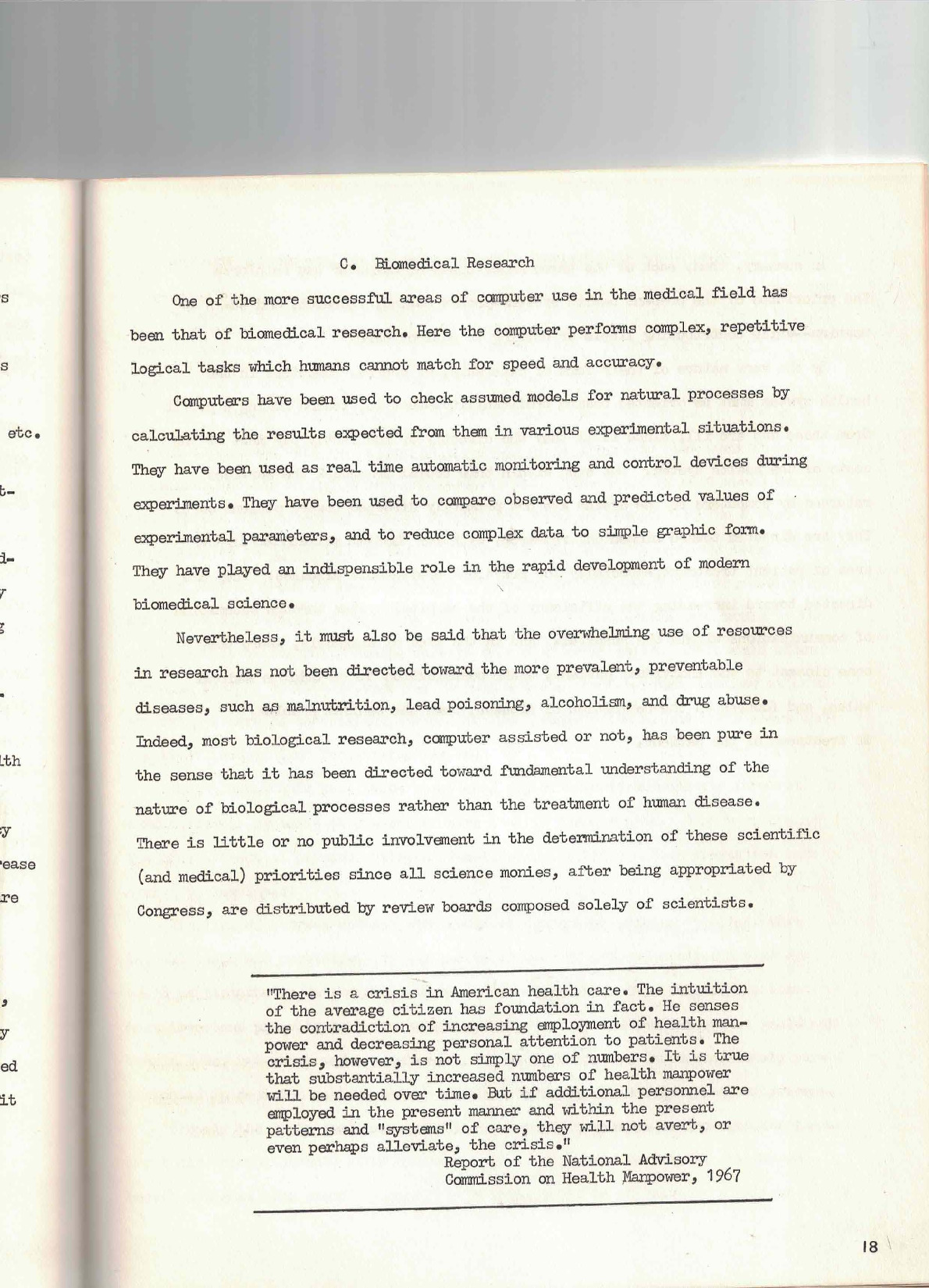
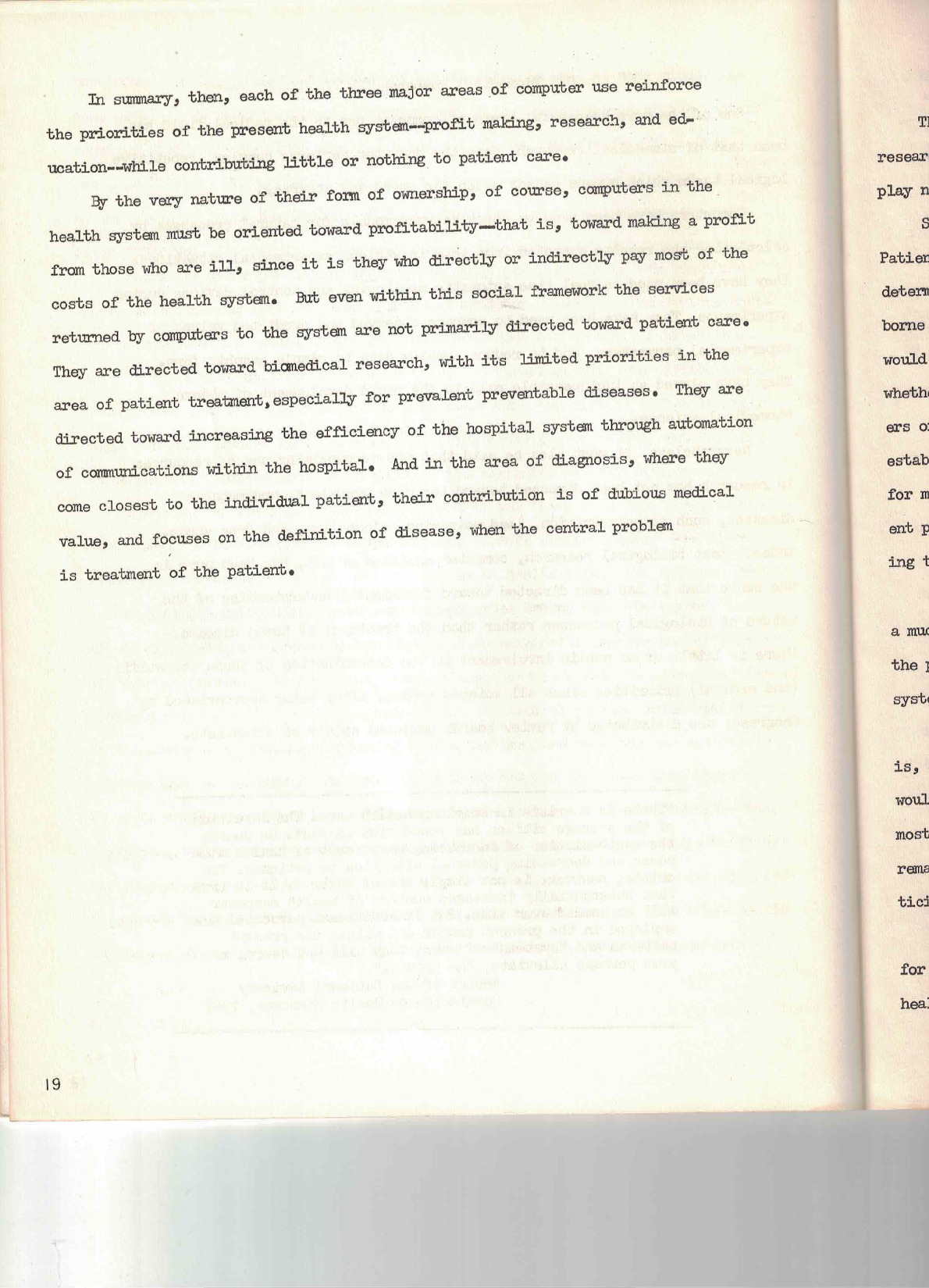
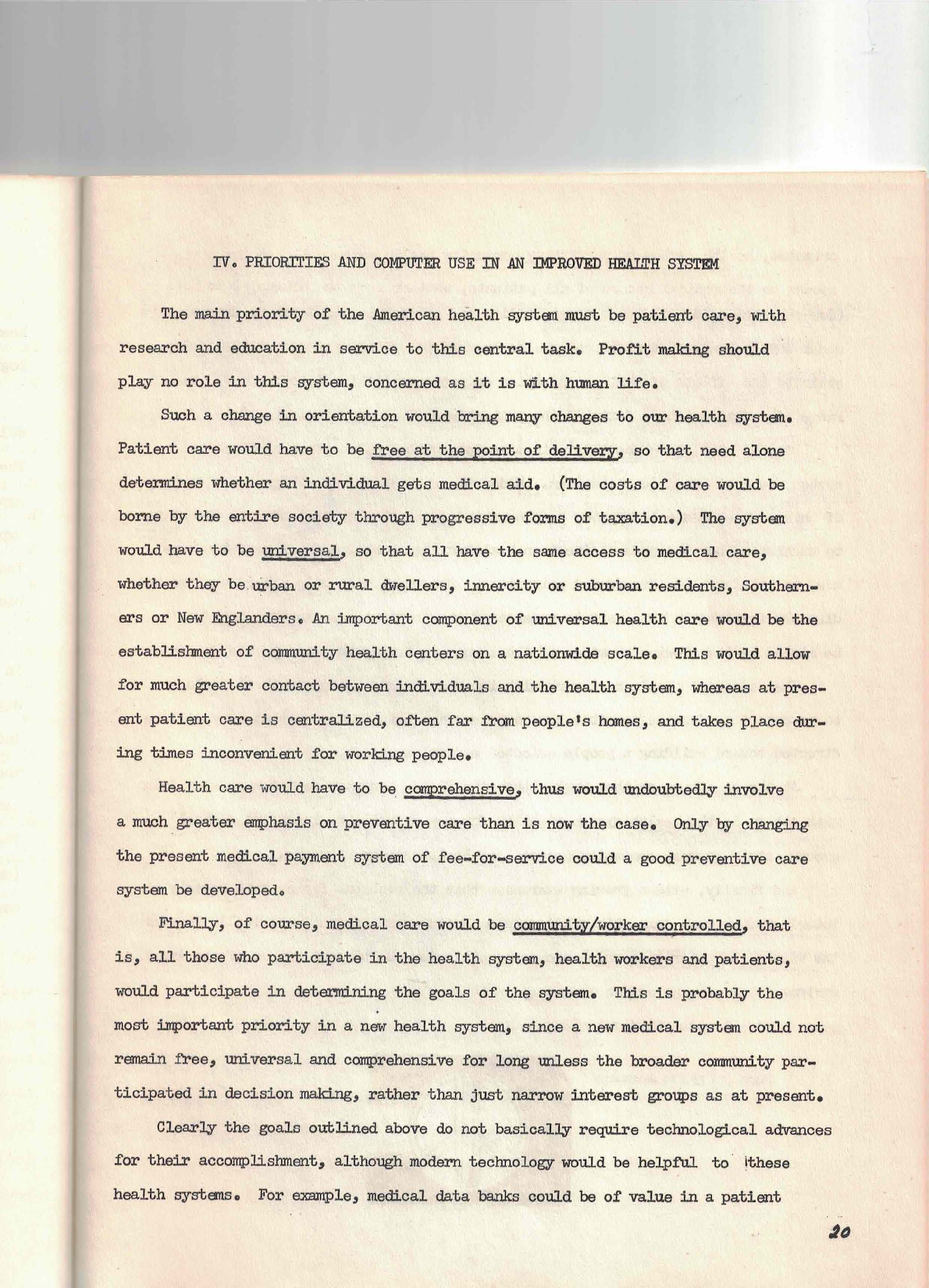
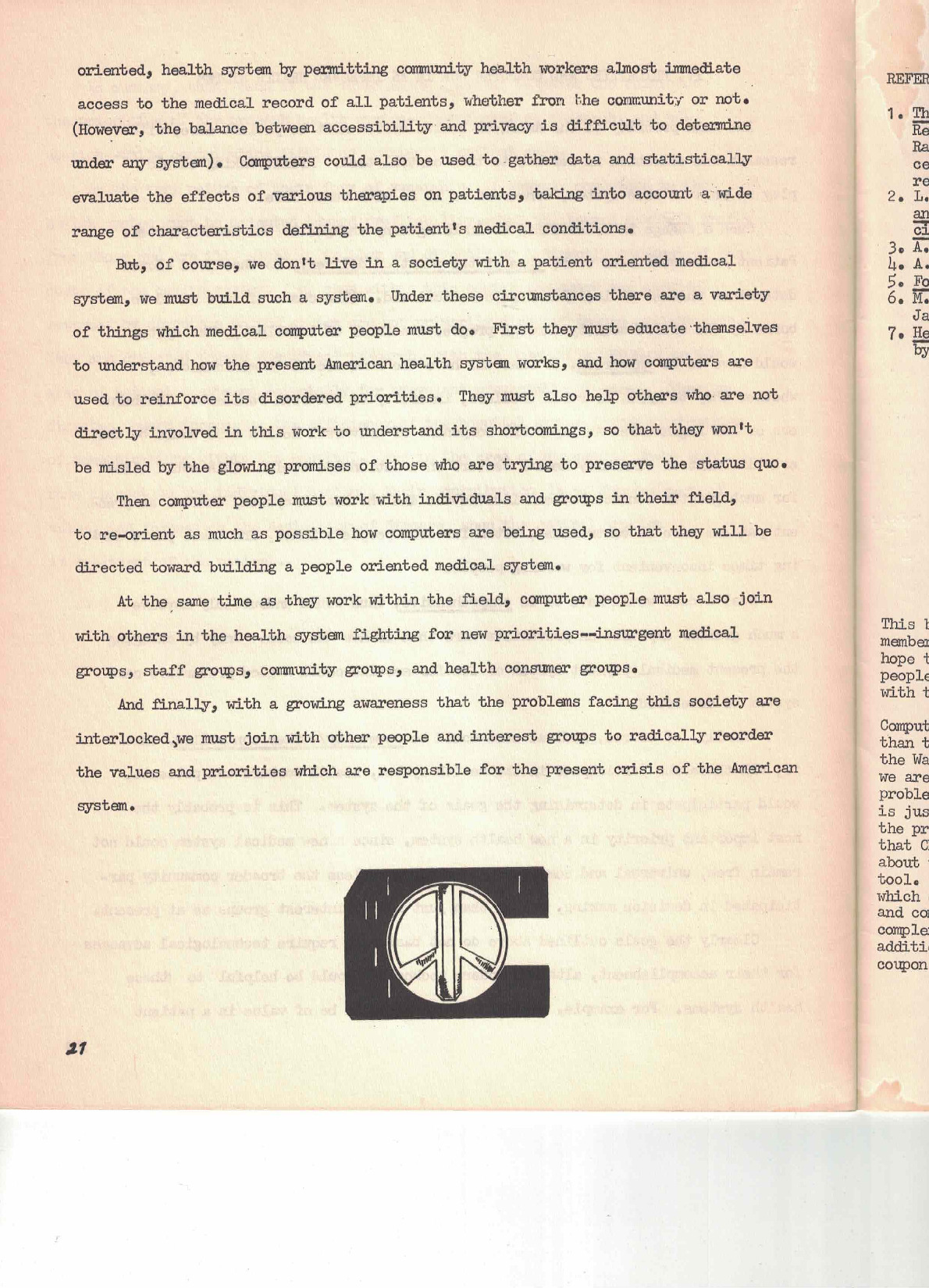
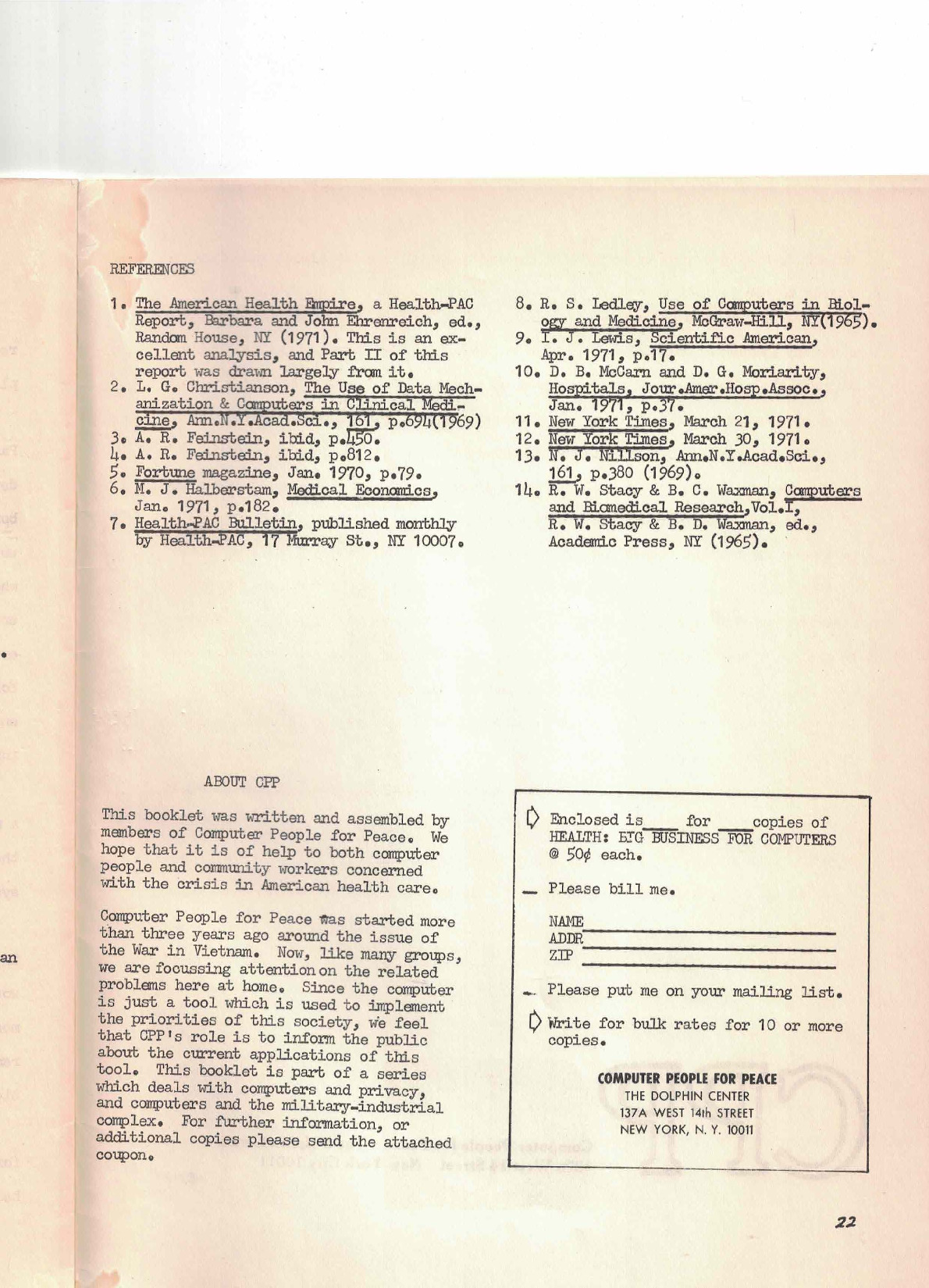
Pamphlet »Health: Big Business for Computers«, by Dave Kotelchuck
- Date
- 1971
- Archive
-
»The Technological Warlords«, Hack Manhattan Wiki https://wiki.hackmanhattan.com/images/8/83/CPPWarlords.pdf
»Health: Big Business for Computers«, Hack Manhattan Wiki https://wiki.hackmanhattan.com/images/b/b1/CPPHealth.pdf
Courtesy of Hack Manhattan
»We Will Not Program Death« reads the large, handwritten title at the top of the typed sheet of paper.1
This stark message is from Computer People for Peace, a group of programmers, systems analysts, and other tech industry workers who in January 1968 came together to protest the uses of the technologies which their industry built. The proximate cause for their organizing was their opposition to the Vietnam War – specifically the actions of the U.S. government and the industries it relied upon to carry out a bloody and unpopular war. »We urge all computer professionals to seek employment in projects unrelated to war,« they wrote.
The actions of the U.S. in Vietnam acted as a catalyst for the activism of many Americans. Many who protested it focused on the connections between the technological outputs of the military industrial complex in the U.S. and the destructive outcomes of the nation’s foreign policy. As an editorial in the magazine Computers and Automation pointed out in 1969, the organization of the nation’s military industrial complex meant that the majority of the »vast budget of the U.S. Department of Defense« totalling roughly 80 billion per year at this time, went to only about 100 companies.2
The workers who came together in the group, organizing first in New York and later expanding to other cities, saw their work could all too easily sit at the intersection between technology and warfaring. They would ultimately call themselves »Computer People for Peace,« though early on they referred to themselves as »Computer Professionals for Peace.« The group noted they had »become increasingly concerned about« not only this particular war but also »the related problems of poverty, racism, militarism, and the misuse of technology.«
Computer People for Peace (CPP), which existed for under a decade but organized in multiple cities across the U.S., engaged in a variety of protest actions and community service efforts to try to alter the course of U.S. history of technology – and specifically the course of the U.S. technology corporations. In the late 1960s, they not only organized and participated in marches, but also »program[ed] a computer to produce voting lists to aid peace candidate campaigns« and sought to offer »free computer services« like freelance programming work to »peace organizations« as well as »instruction in computer skills for the disadvantaged.«3
Members did this work in addition to their day jobs as computer programmers. The leaders and members of CPP understood all too well that their positions as computer workers gave them a special privilege and power, and so sought to turn their skills away from developing destructive technologies and towards more constructive forms of technological development. Many computer workers were sometimes in the position of doing jobs that were generally at odds with their social and ethical beliefs and goals, and CPP wanted computer workers to openly recognize this, and lean into this friction to try to make a better world, instead of ignoring it. »As an organization of computer professionals we have the power to help bring about a solution to these problems; we insist on using our skills for constructive, not destructive purposes,« CPP wrote.4
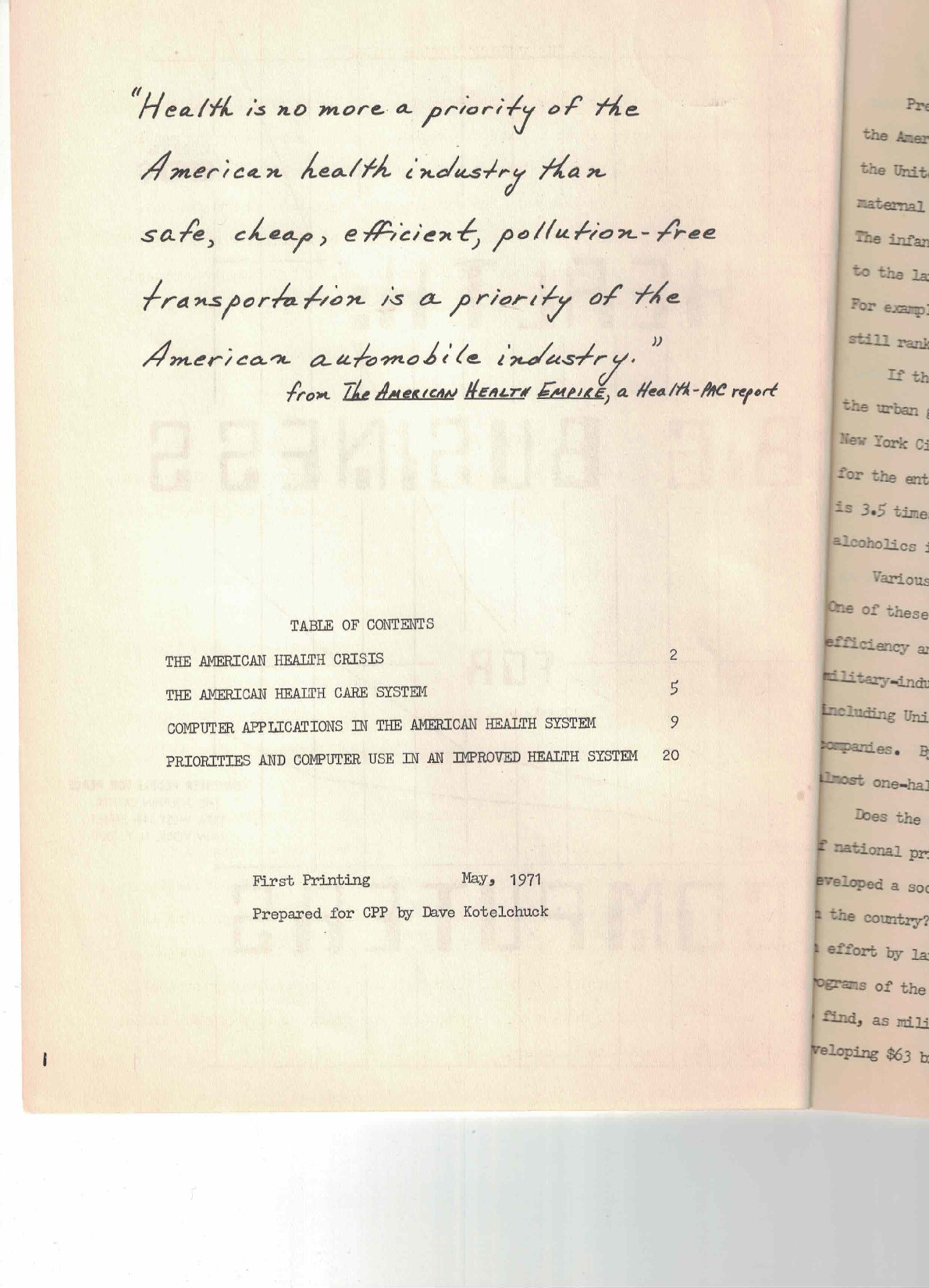
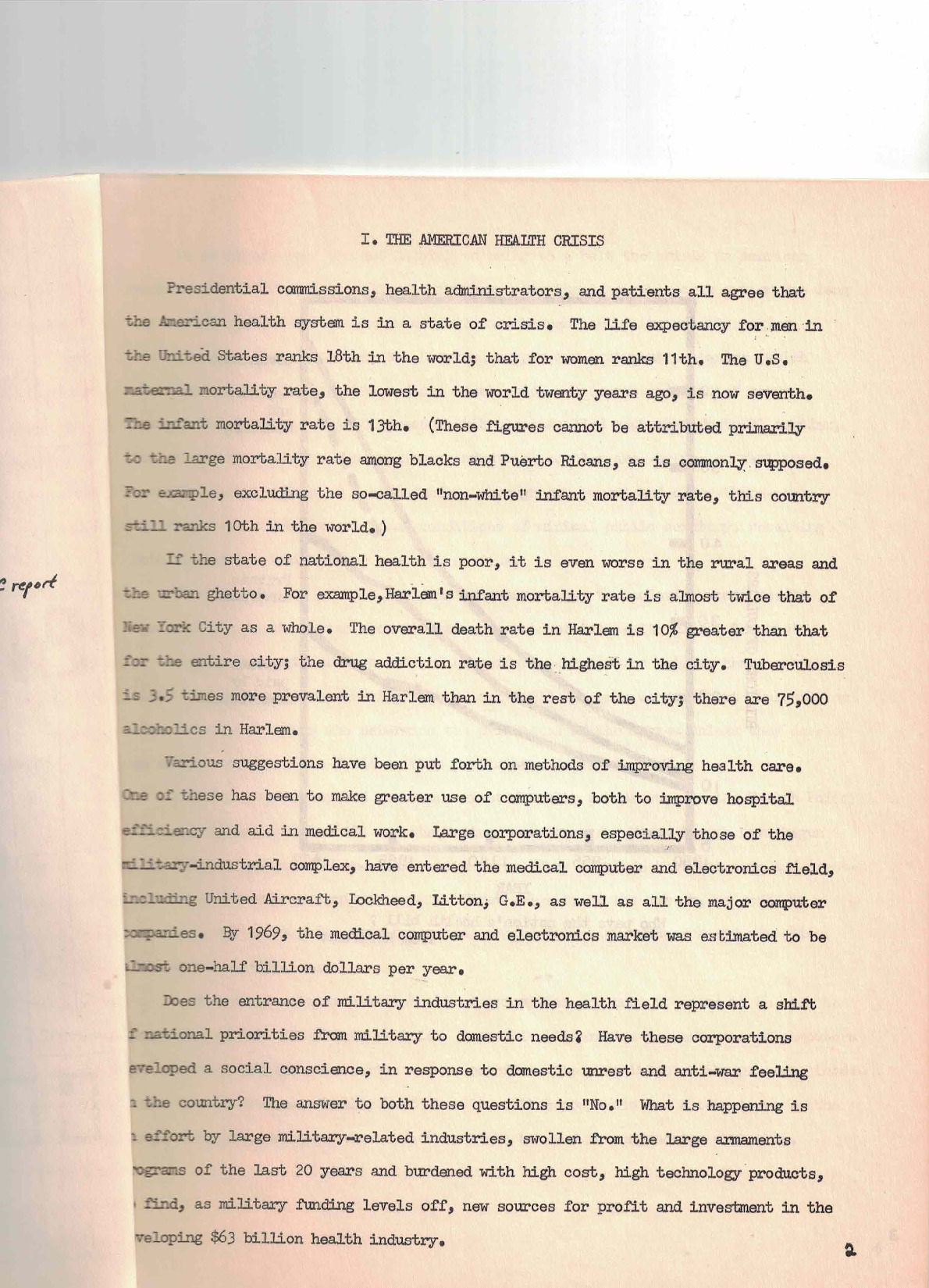
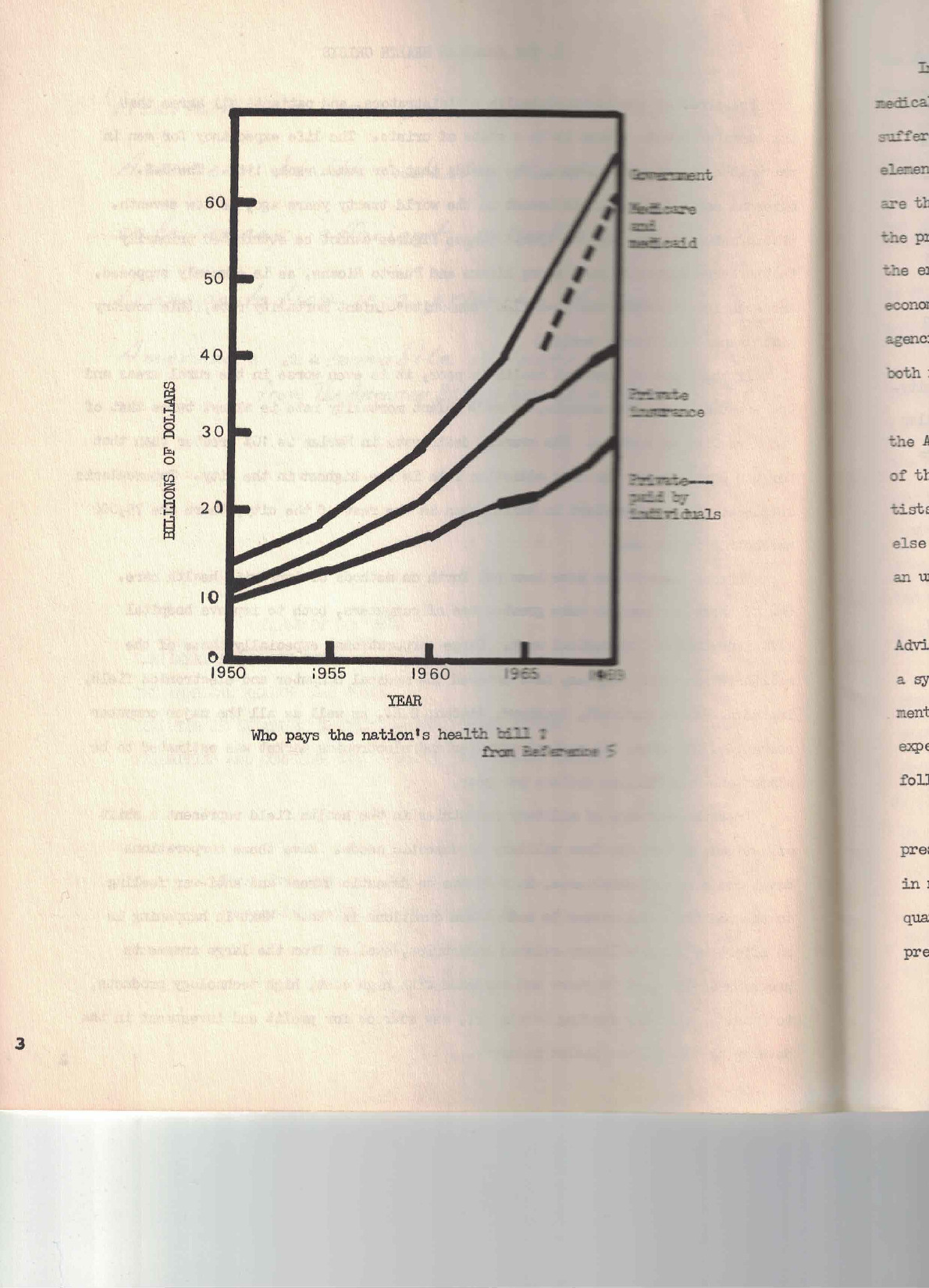
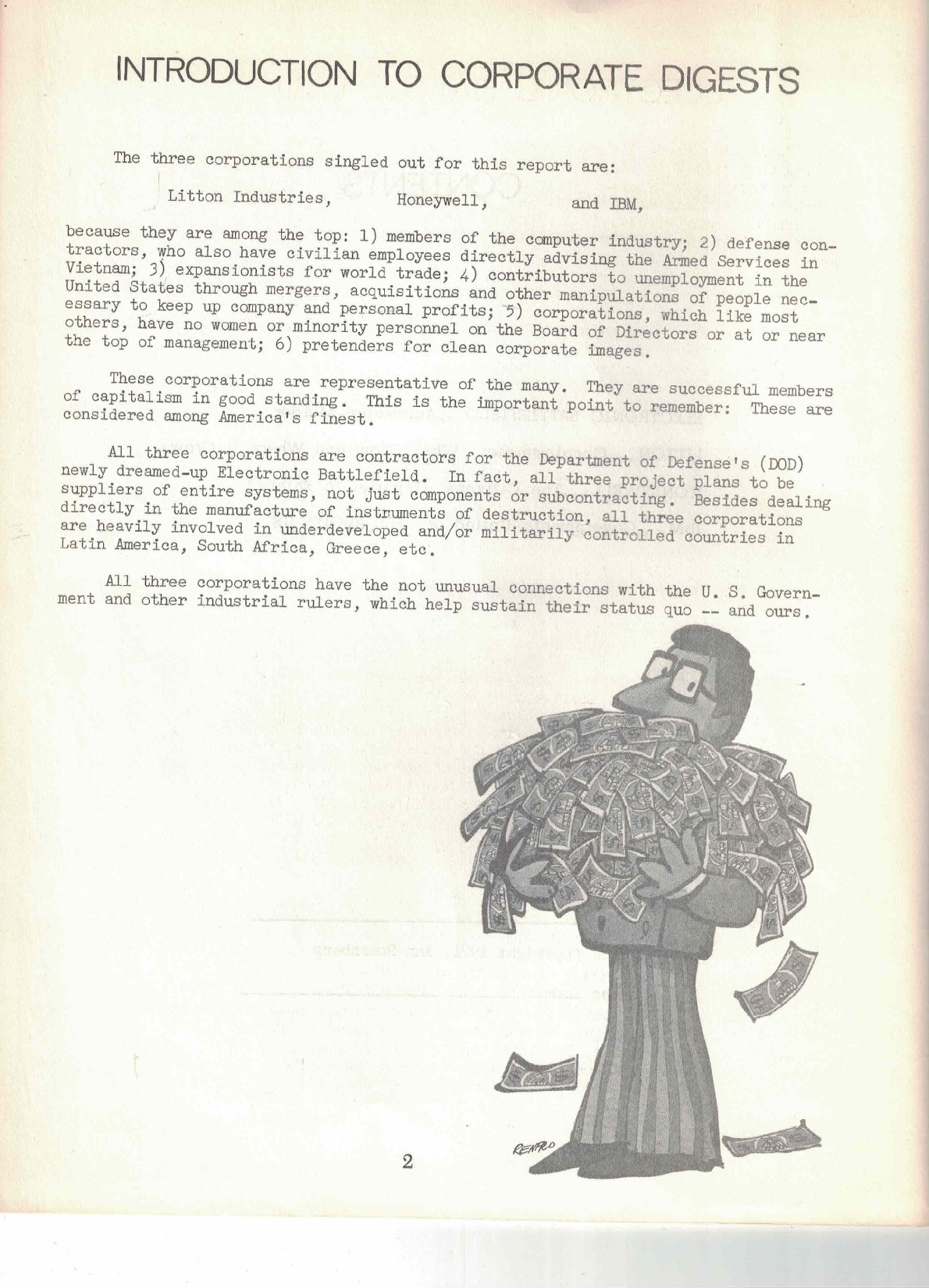
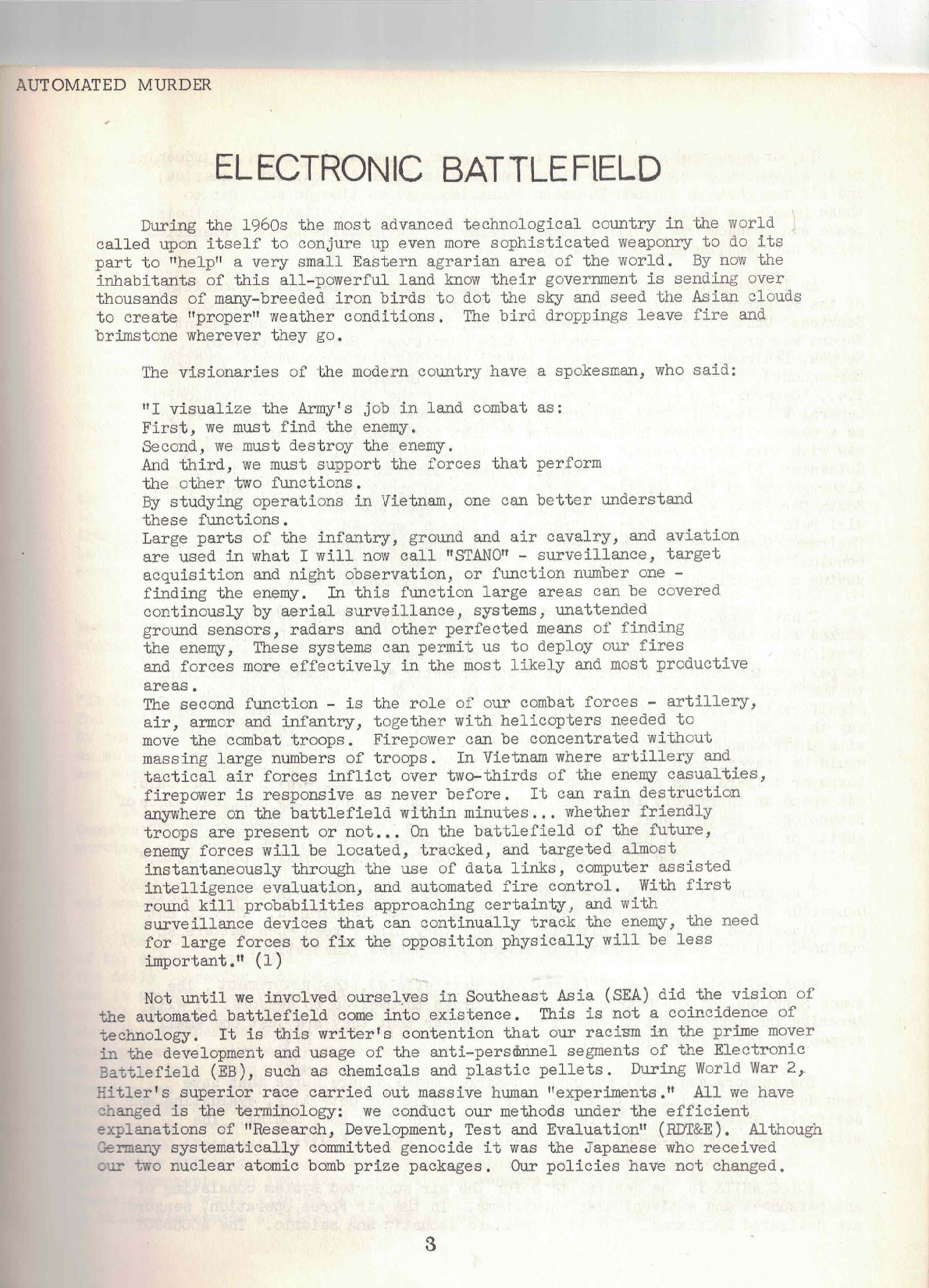
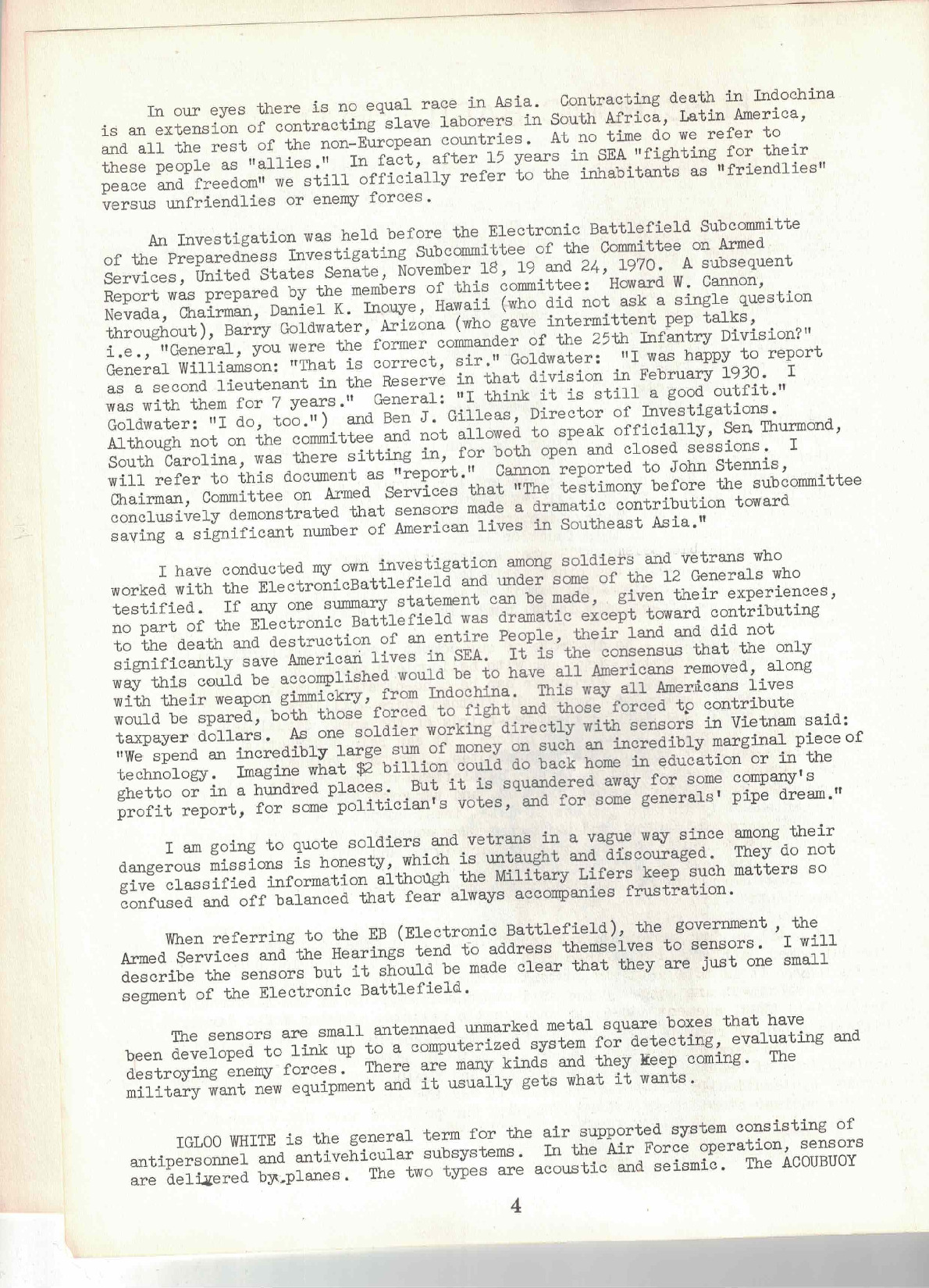
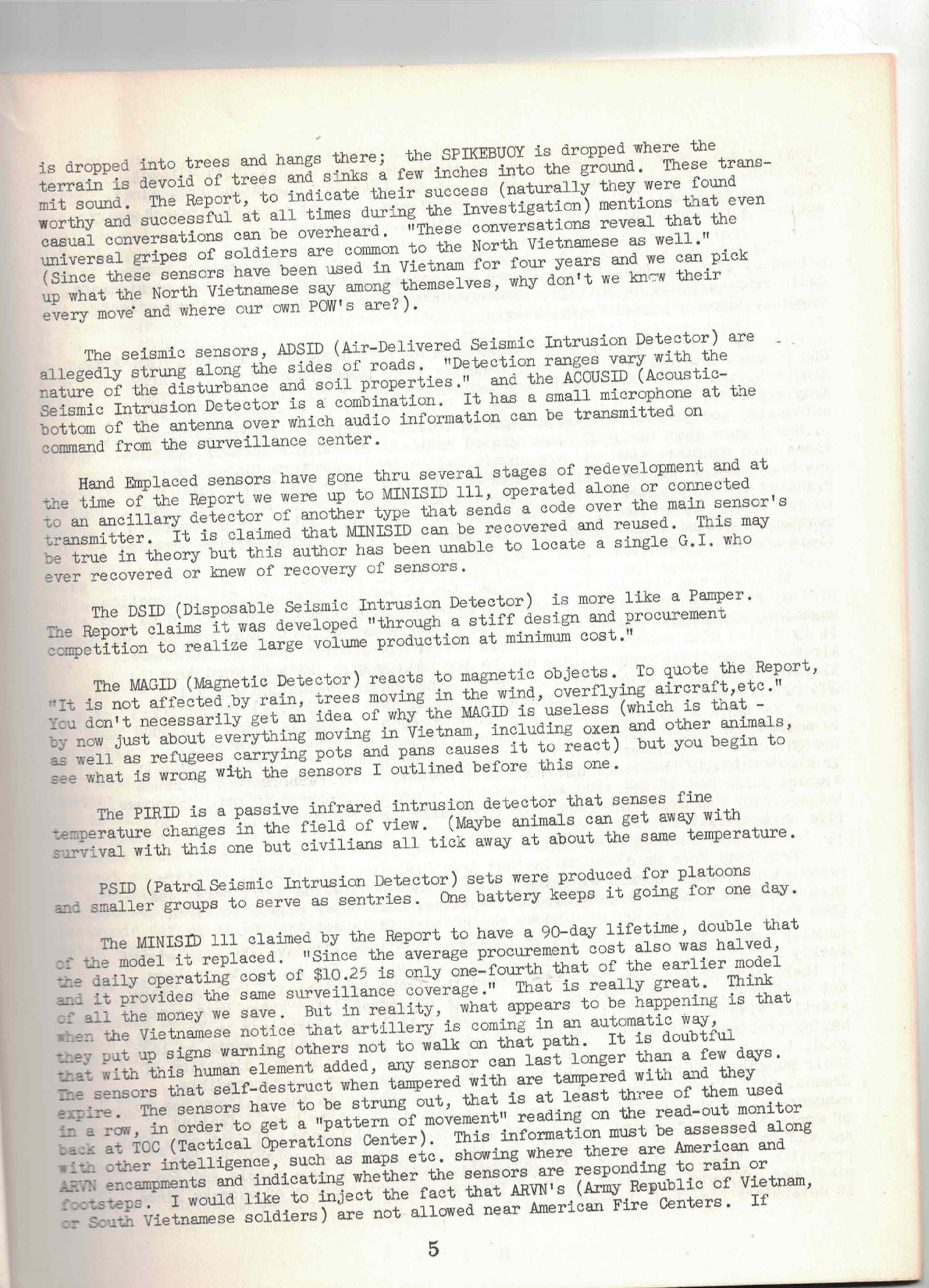
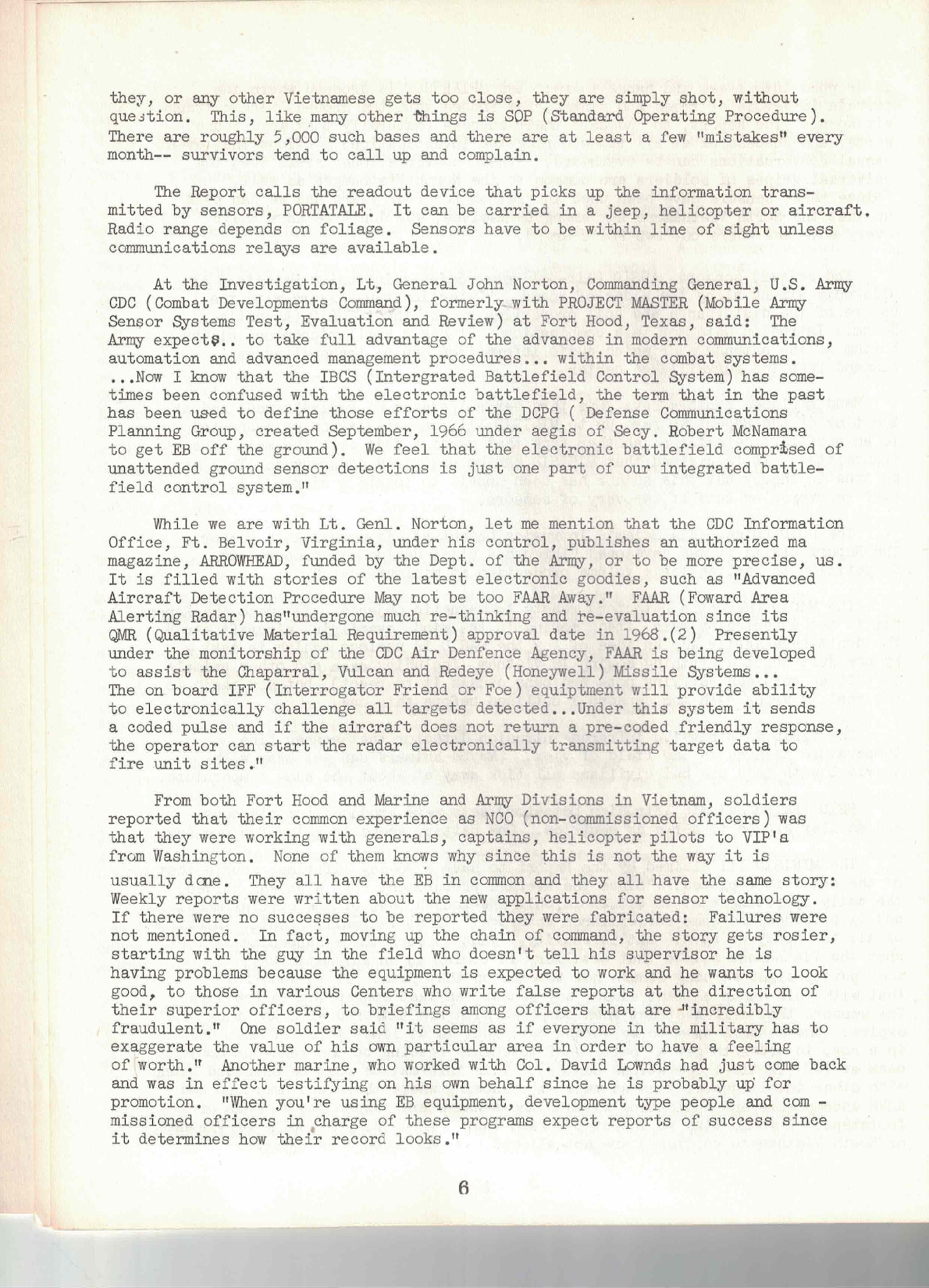
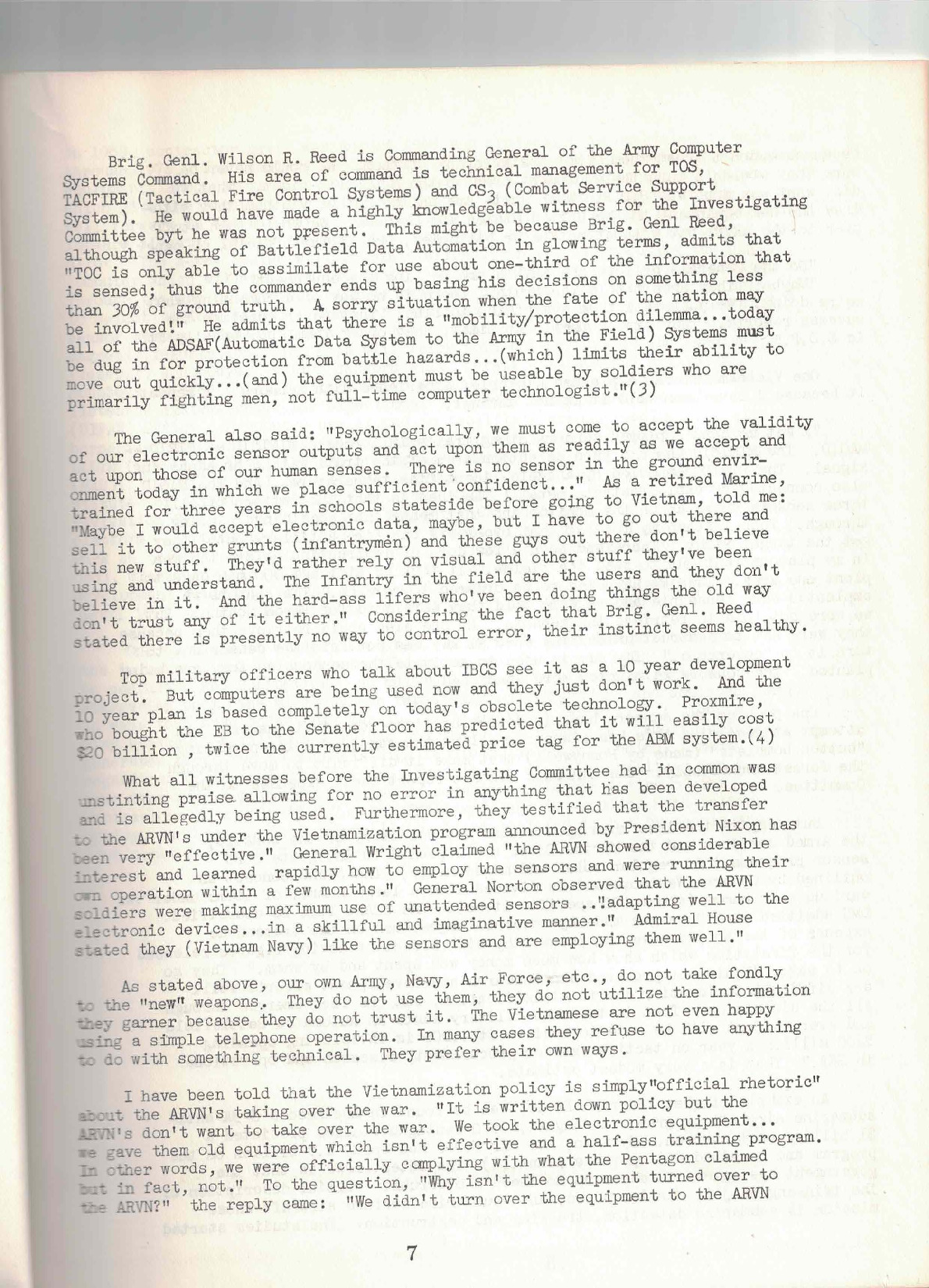
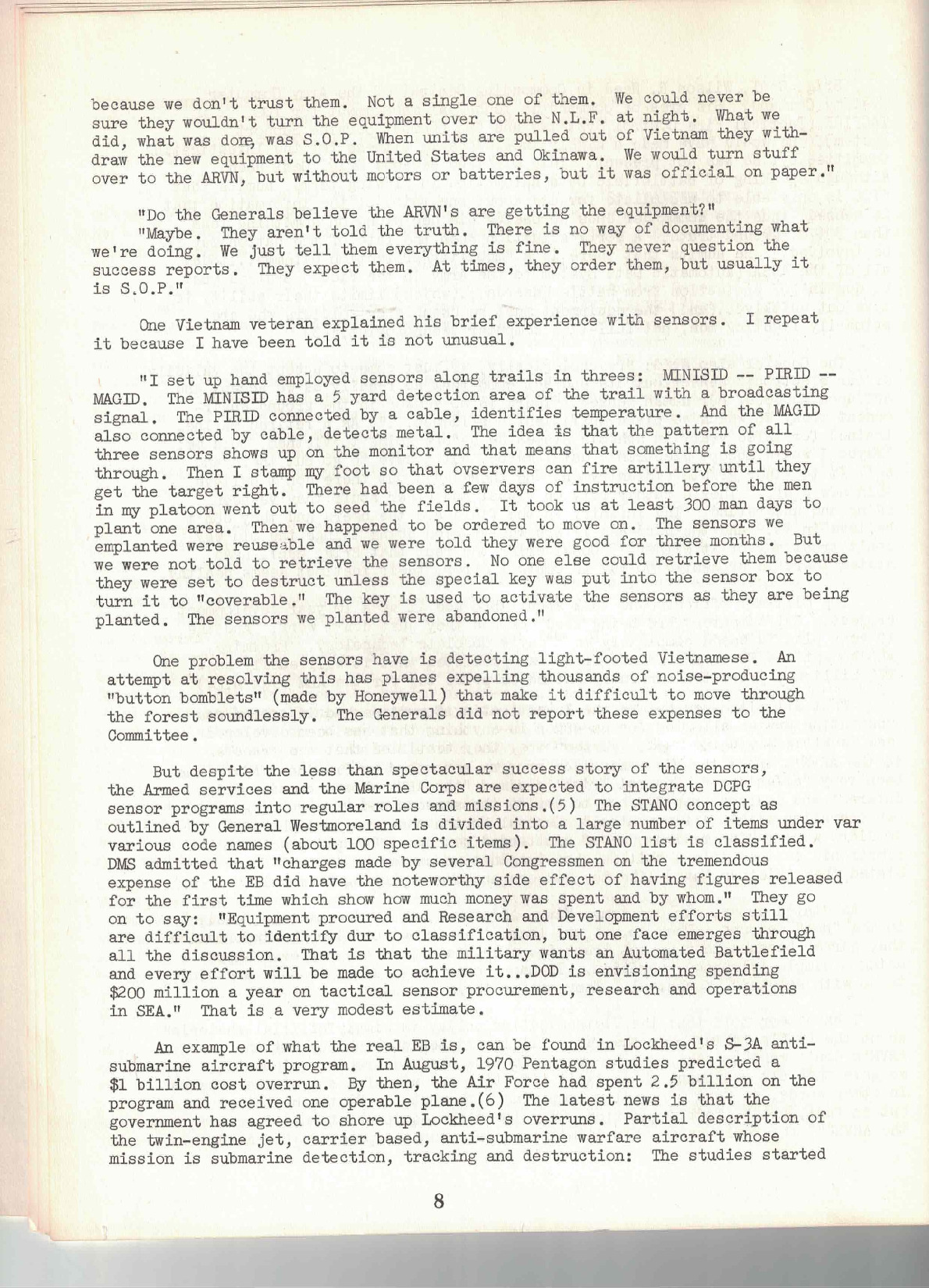
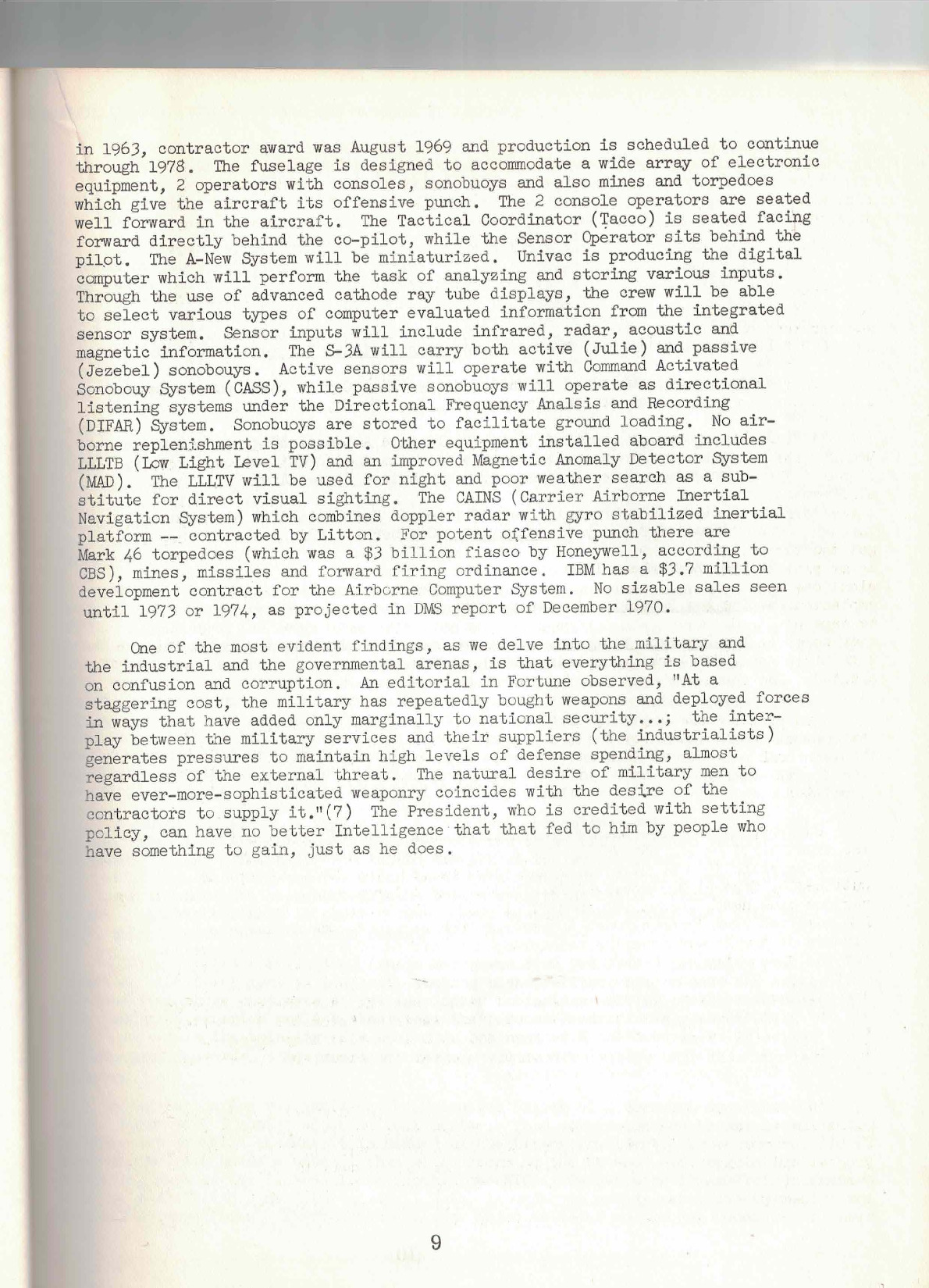
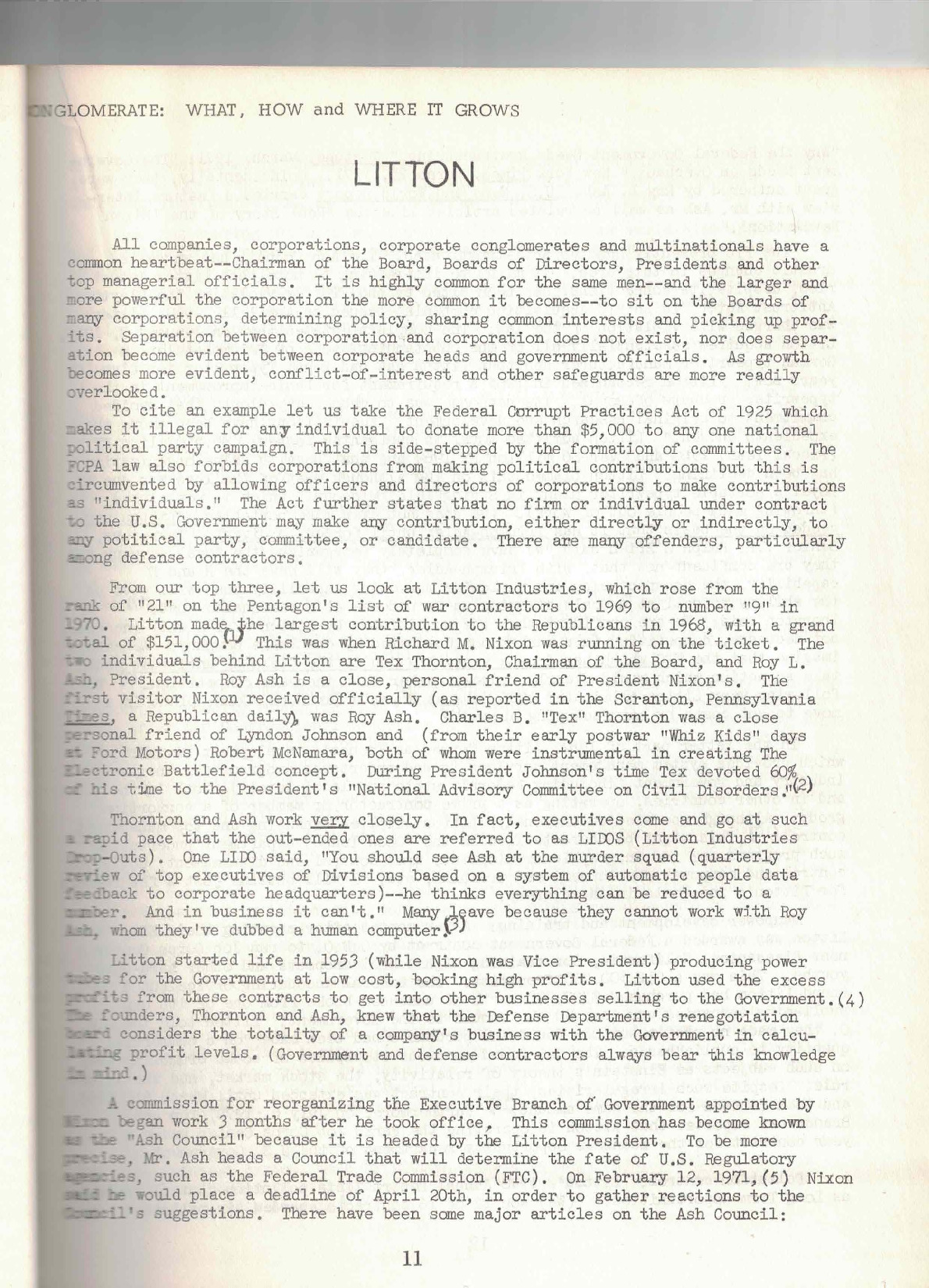
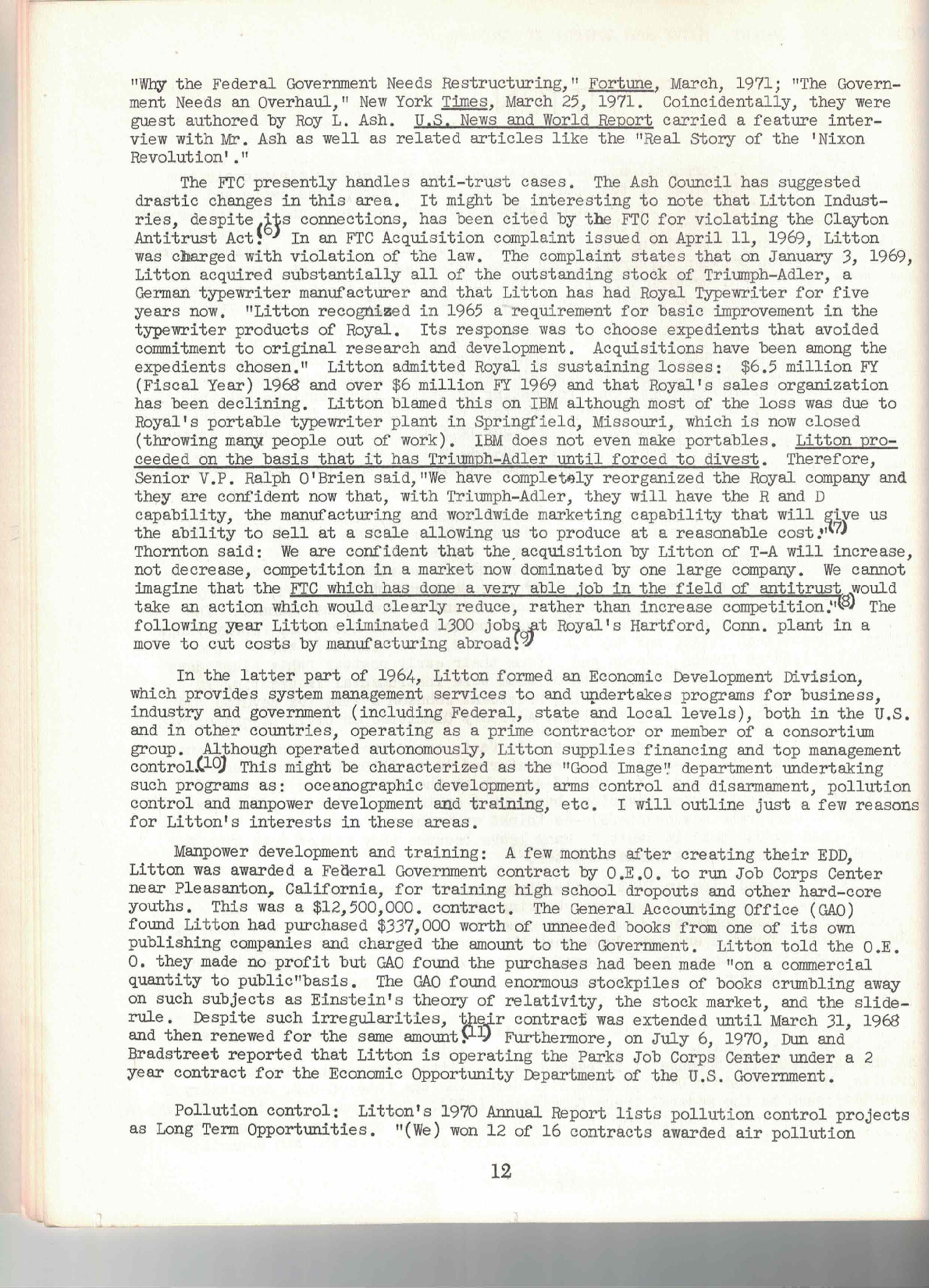
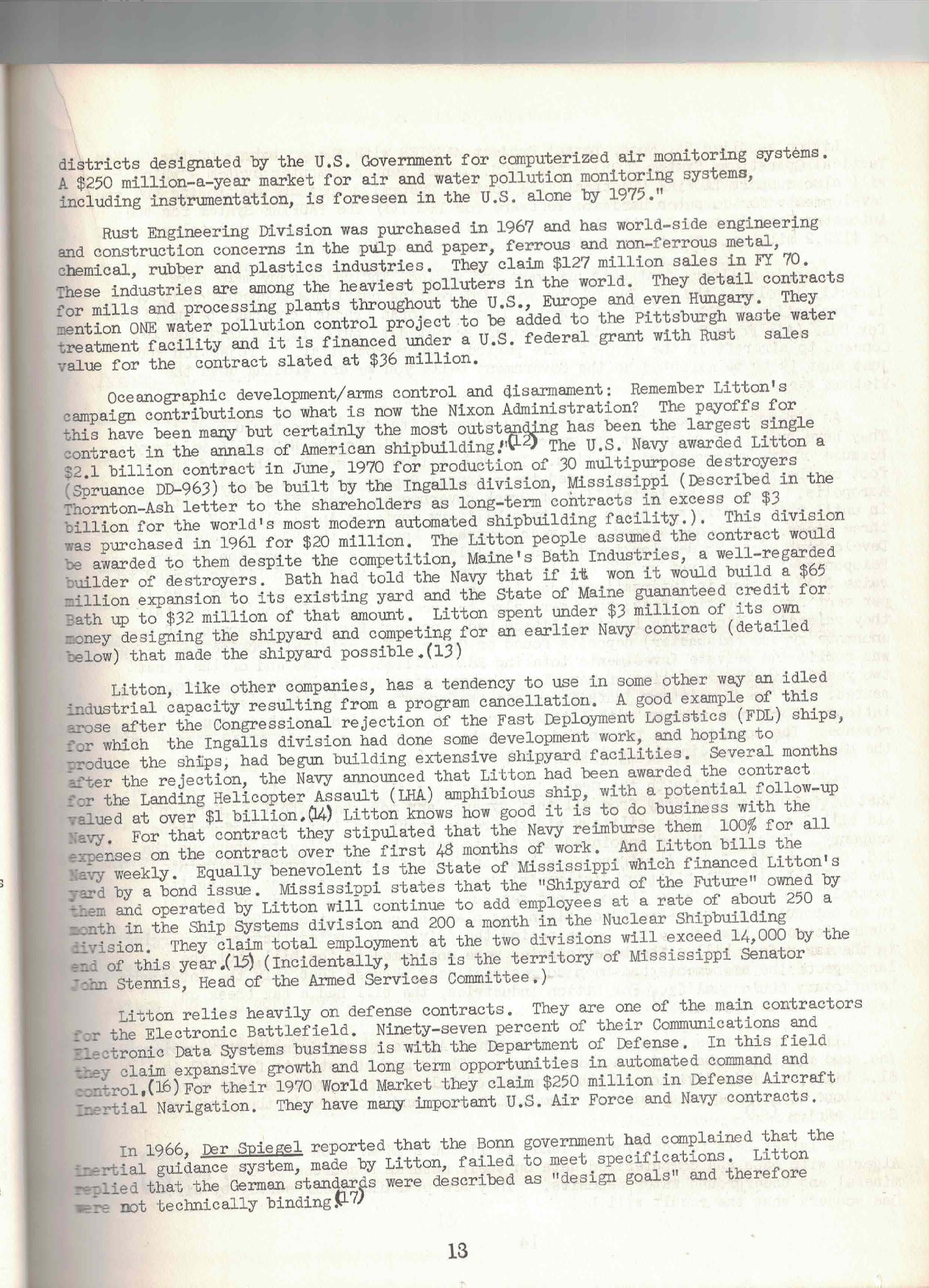
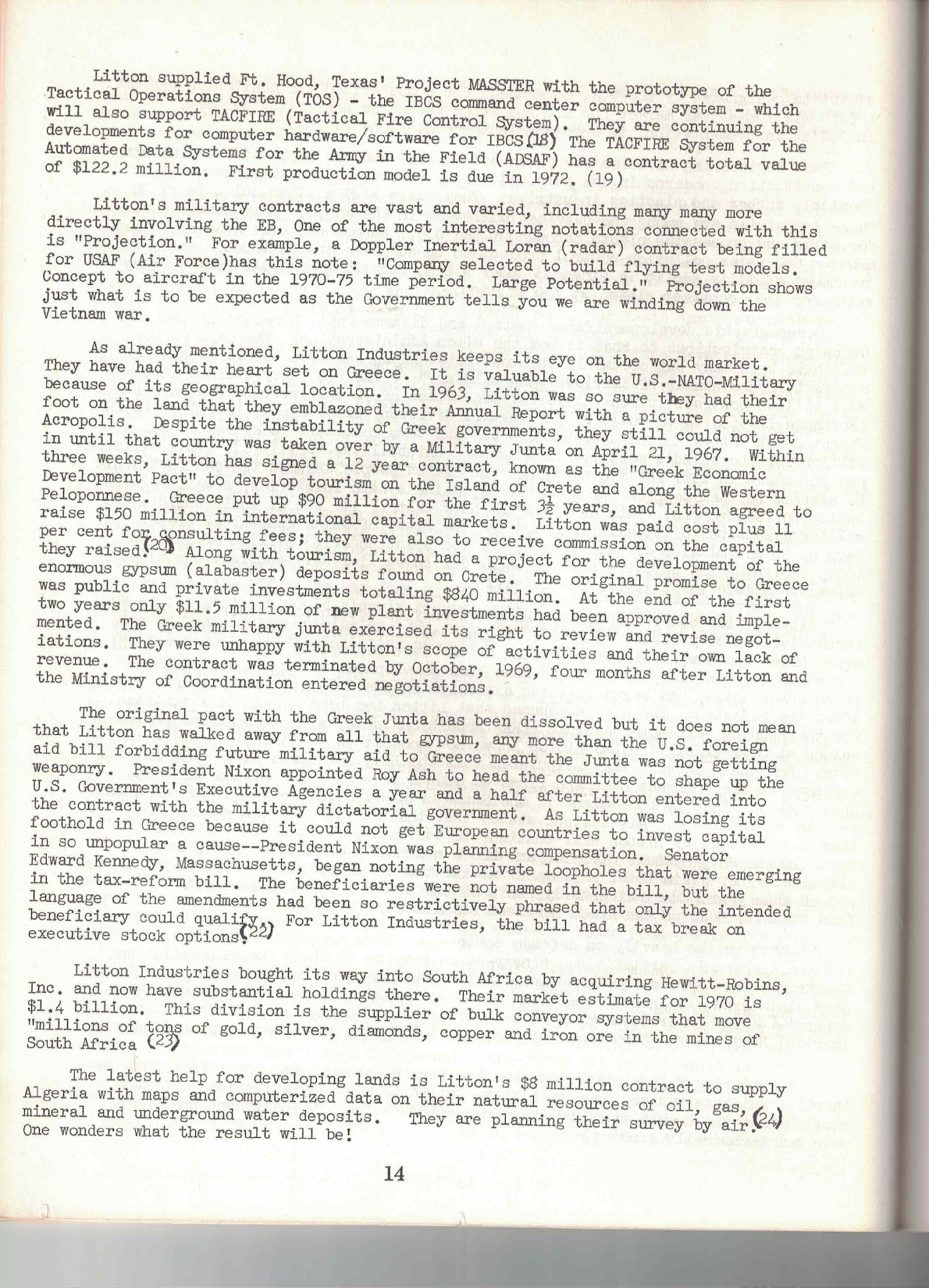
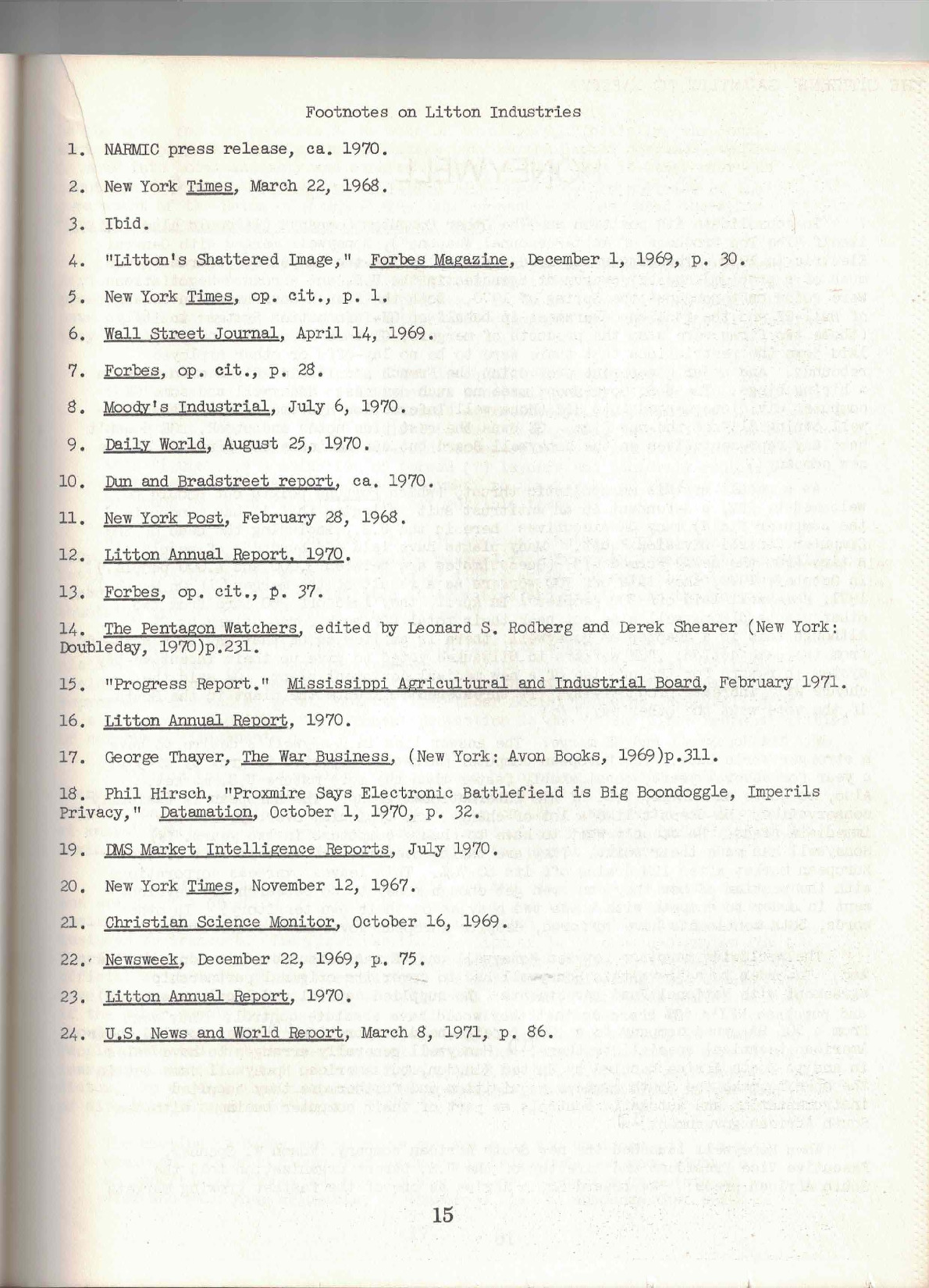
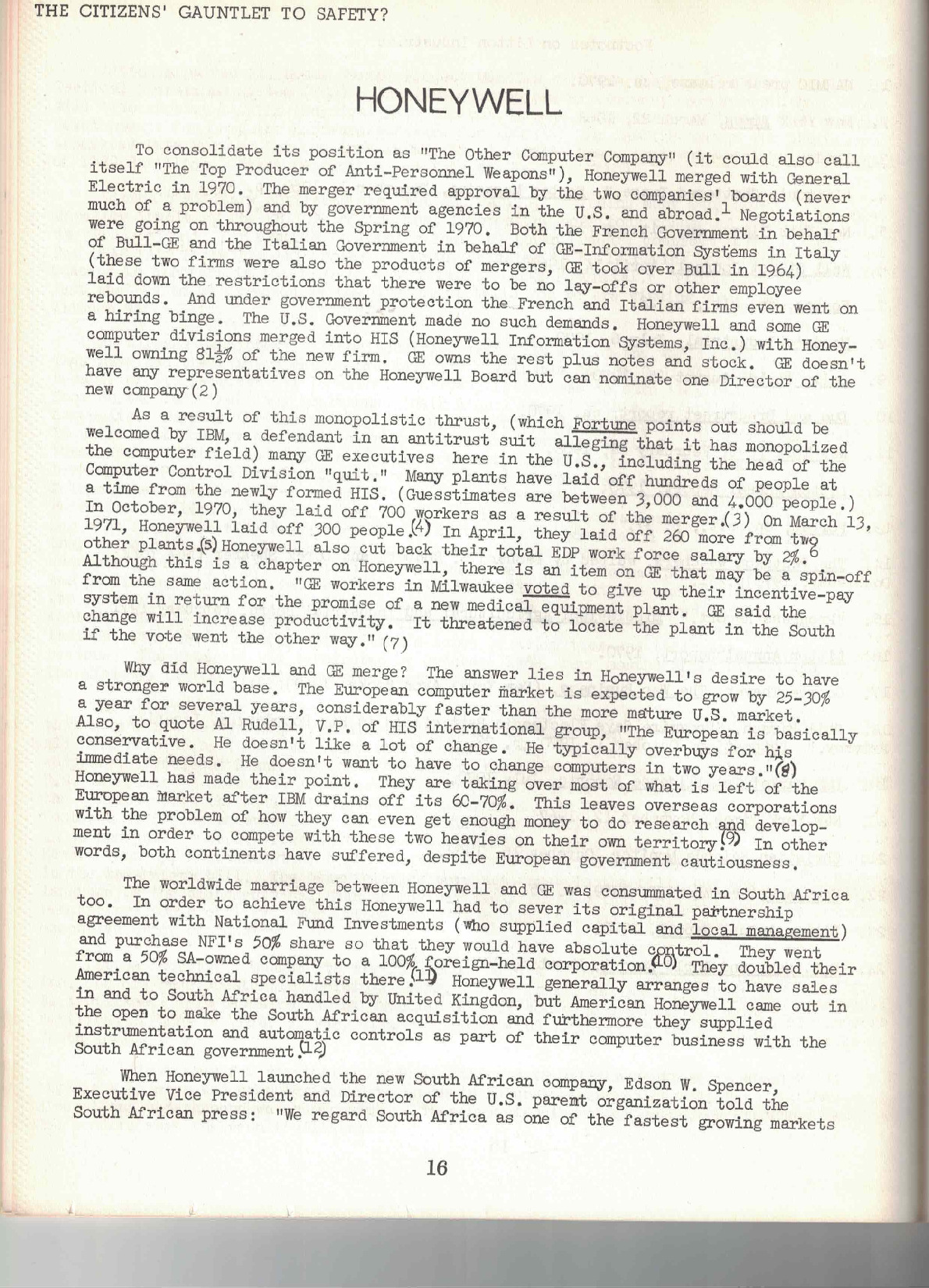
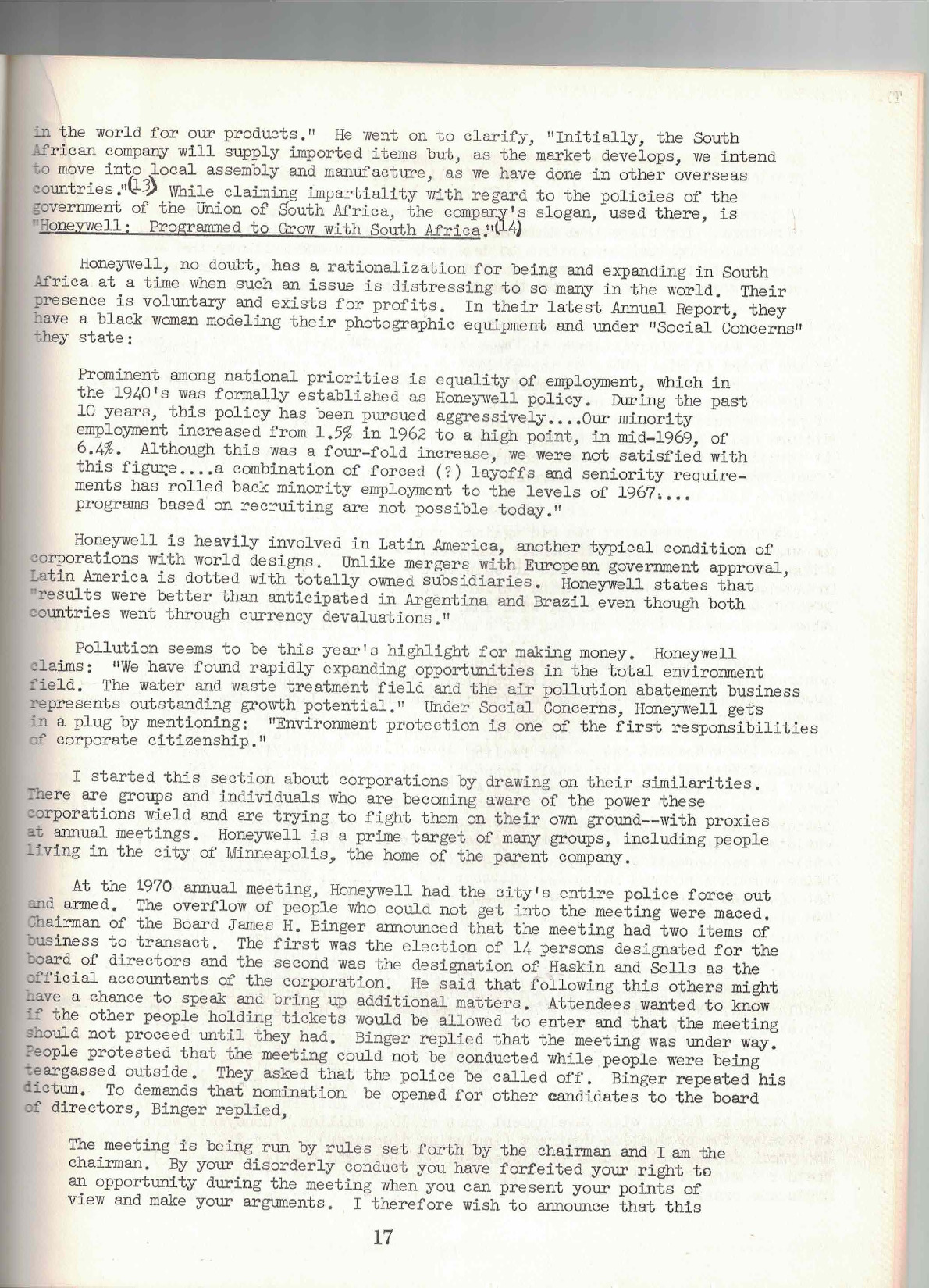
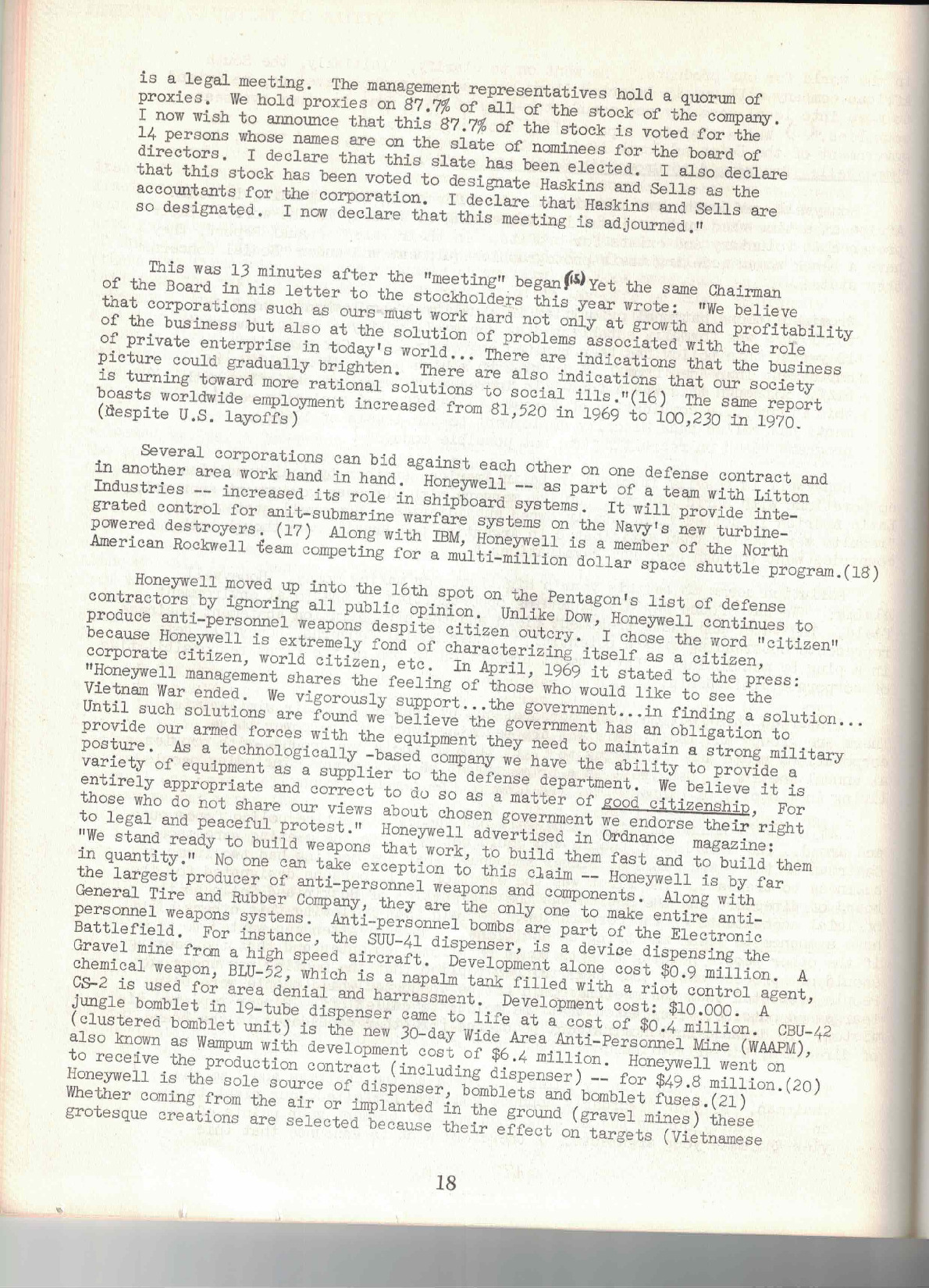
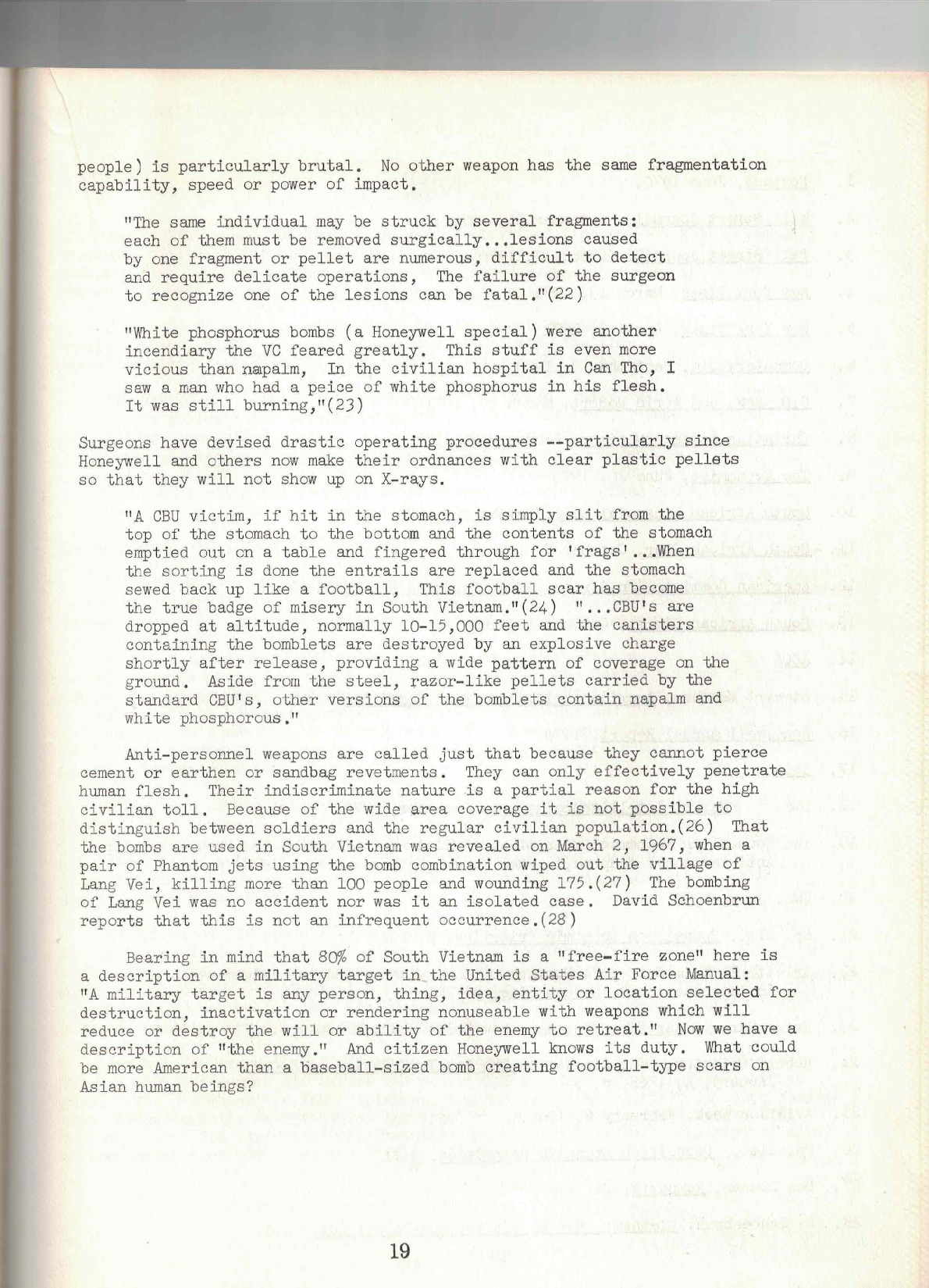
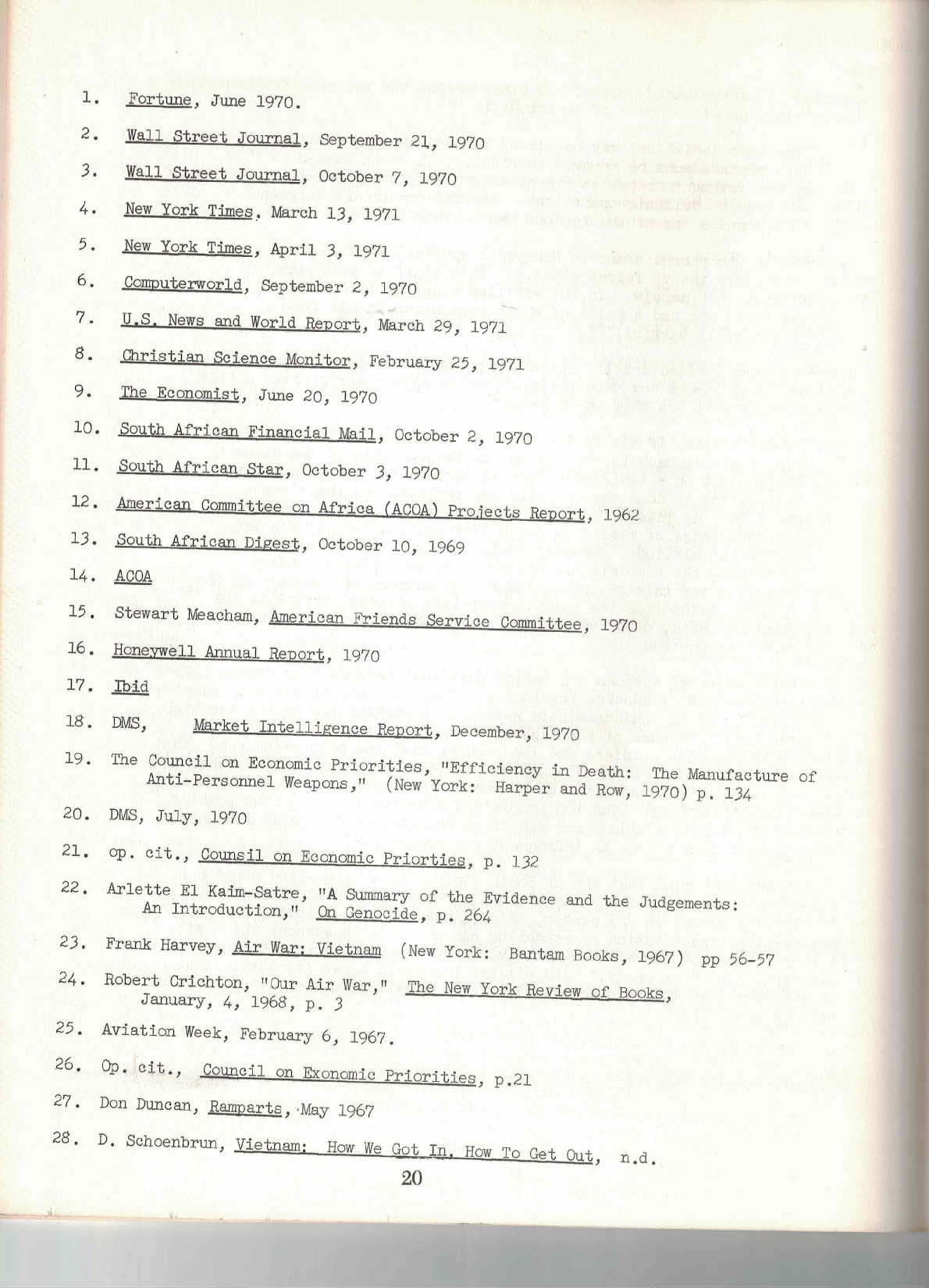
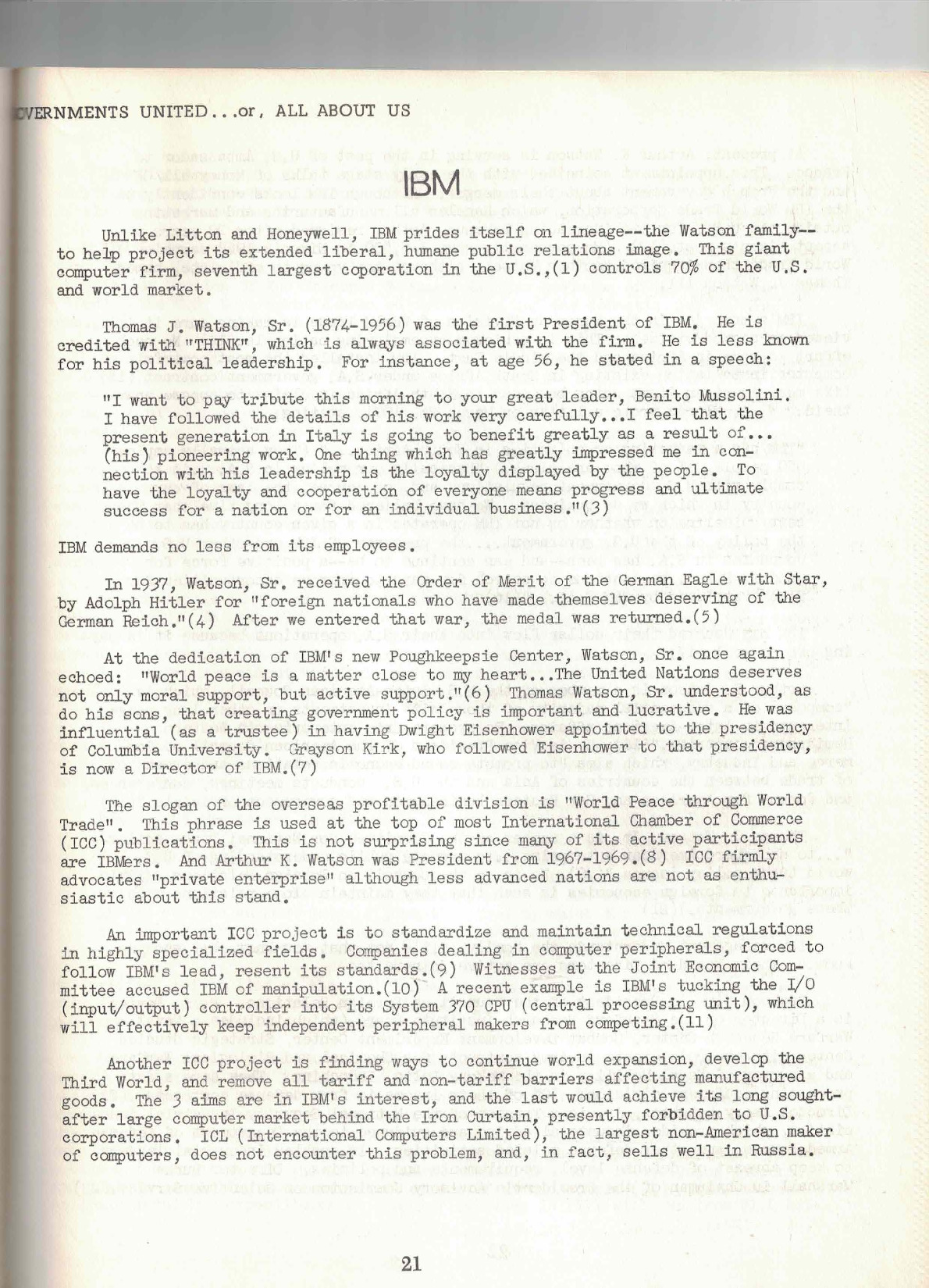
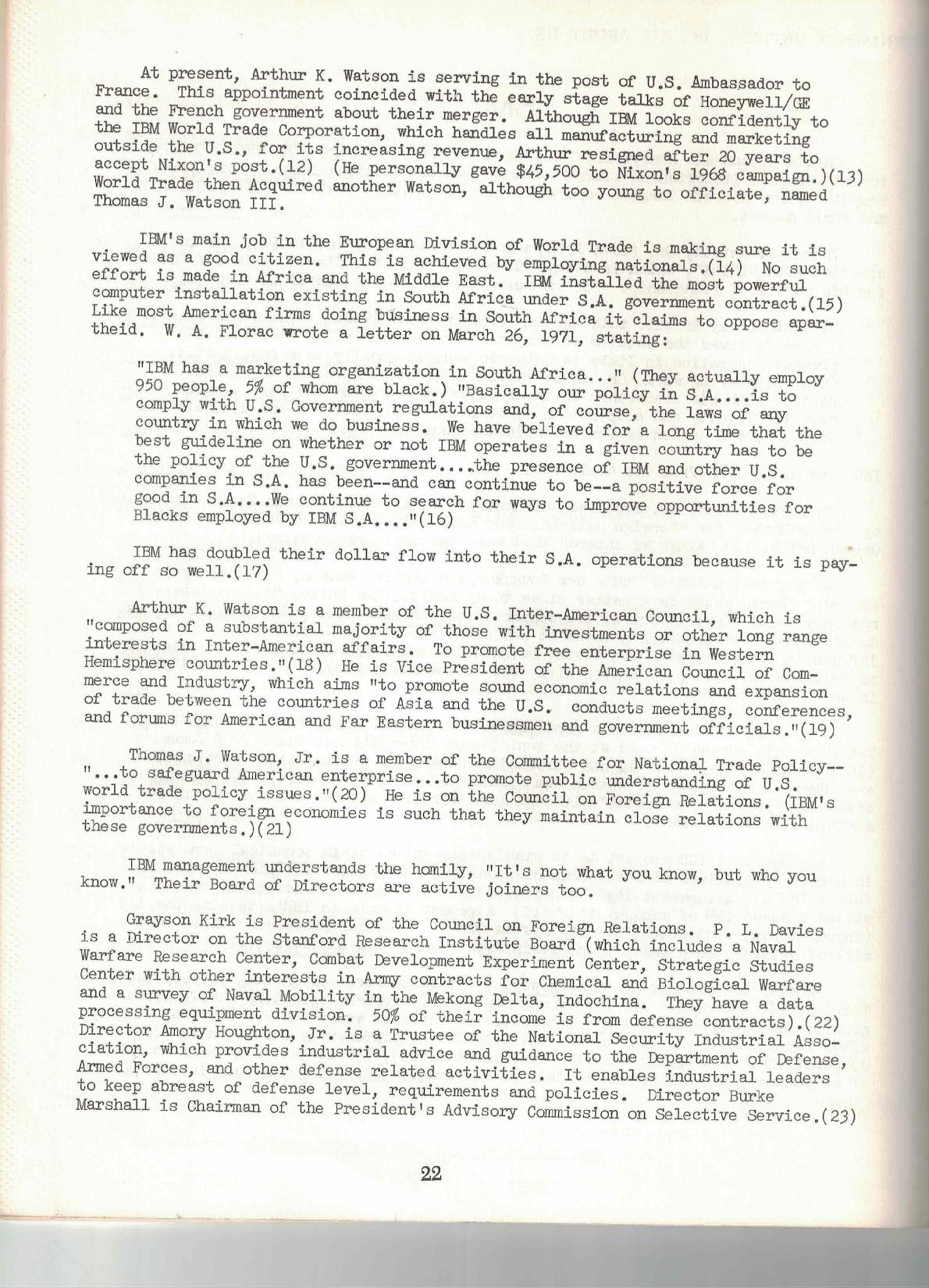
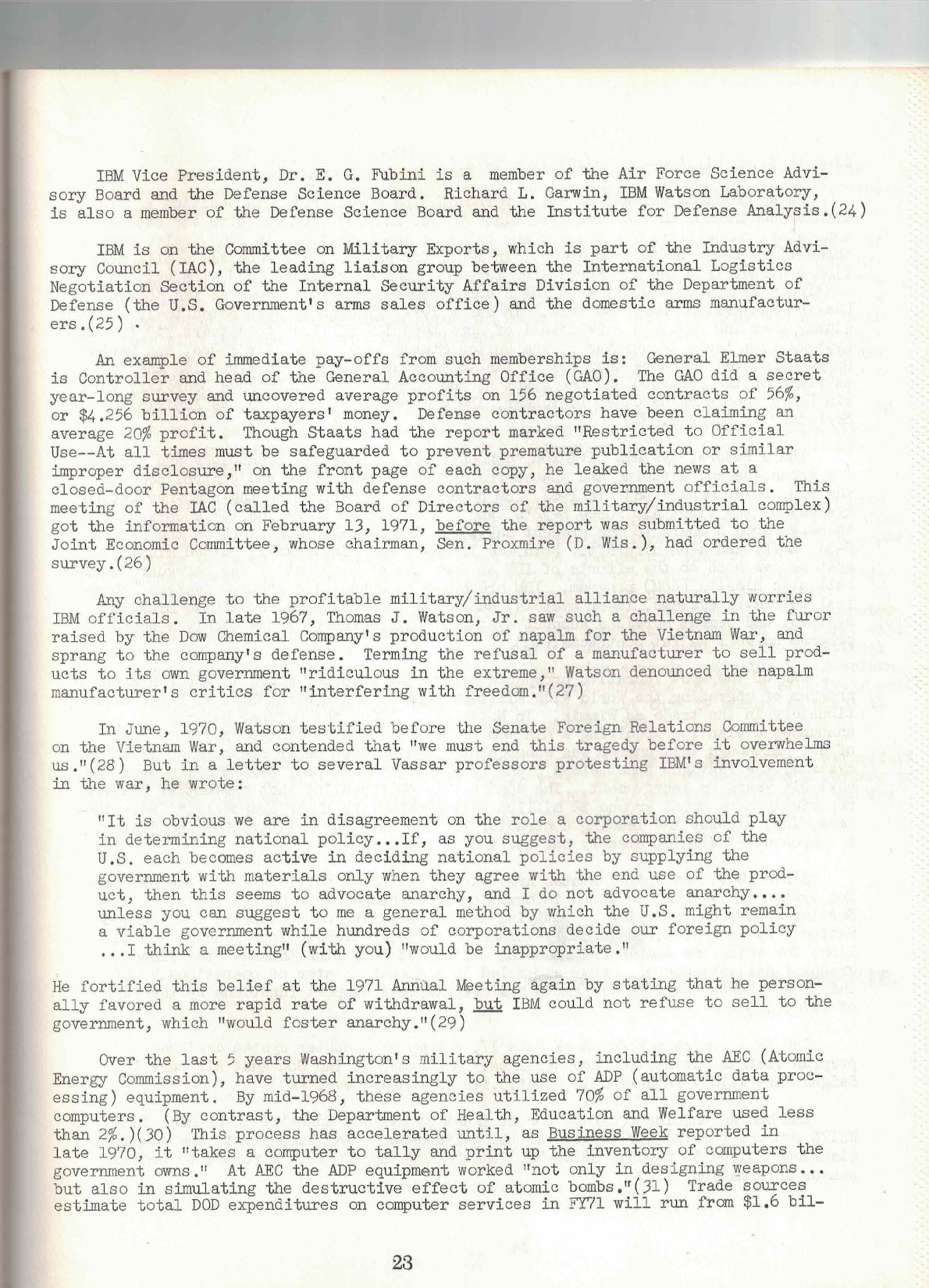
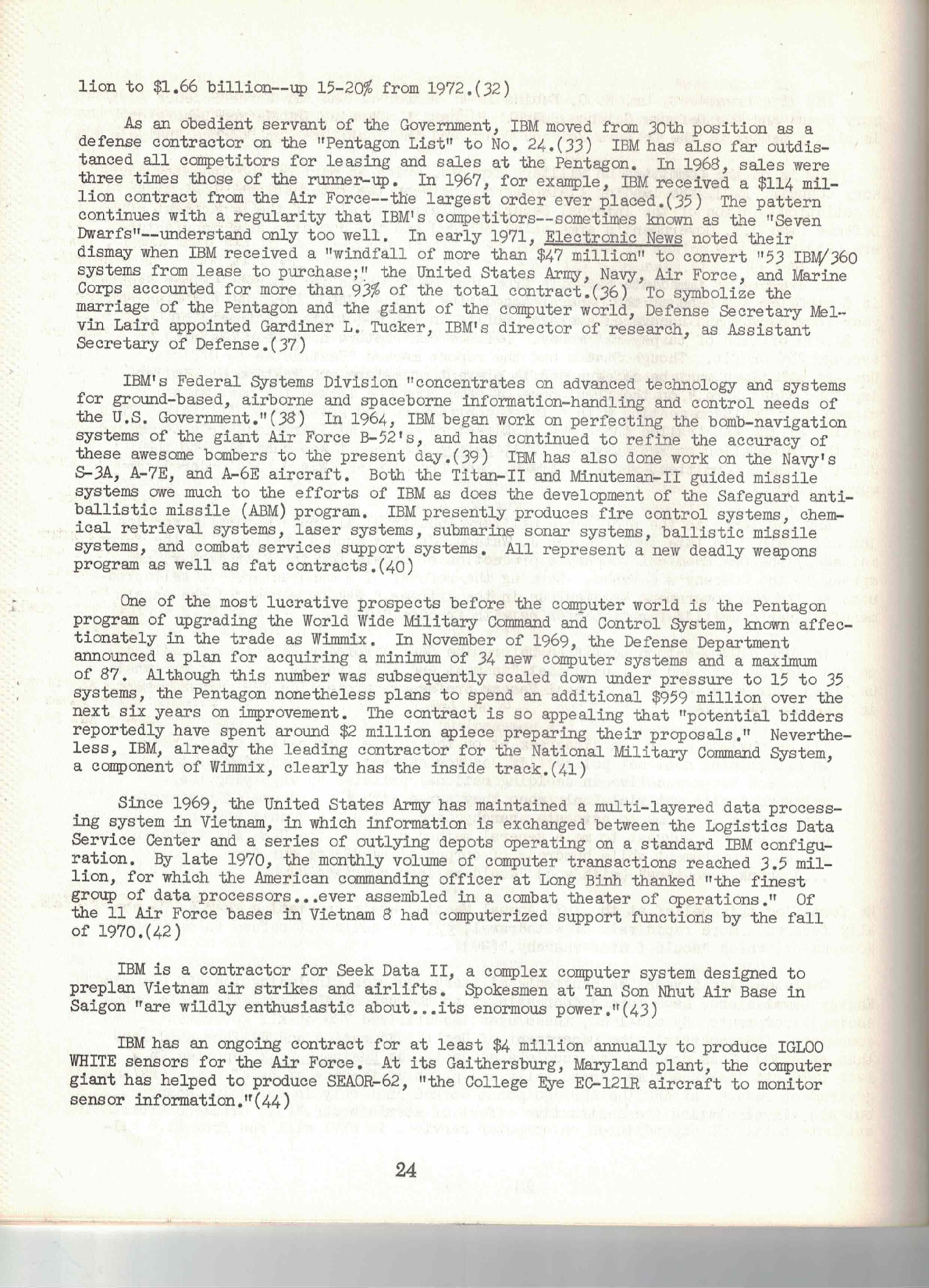
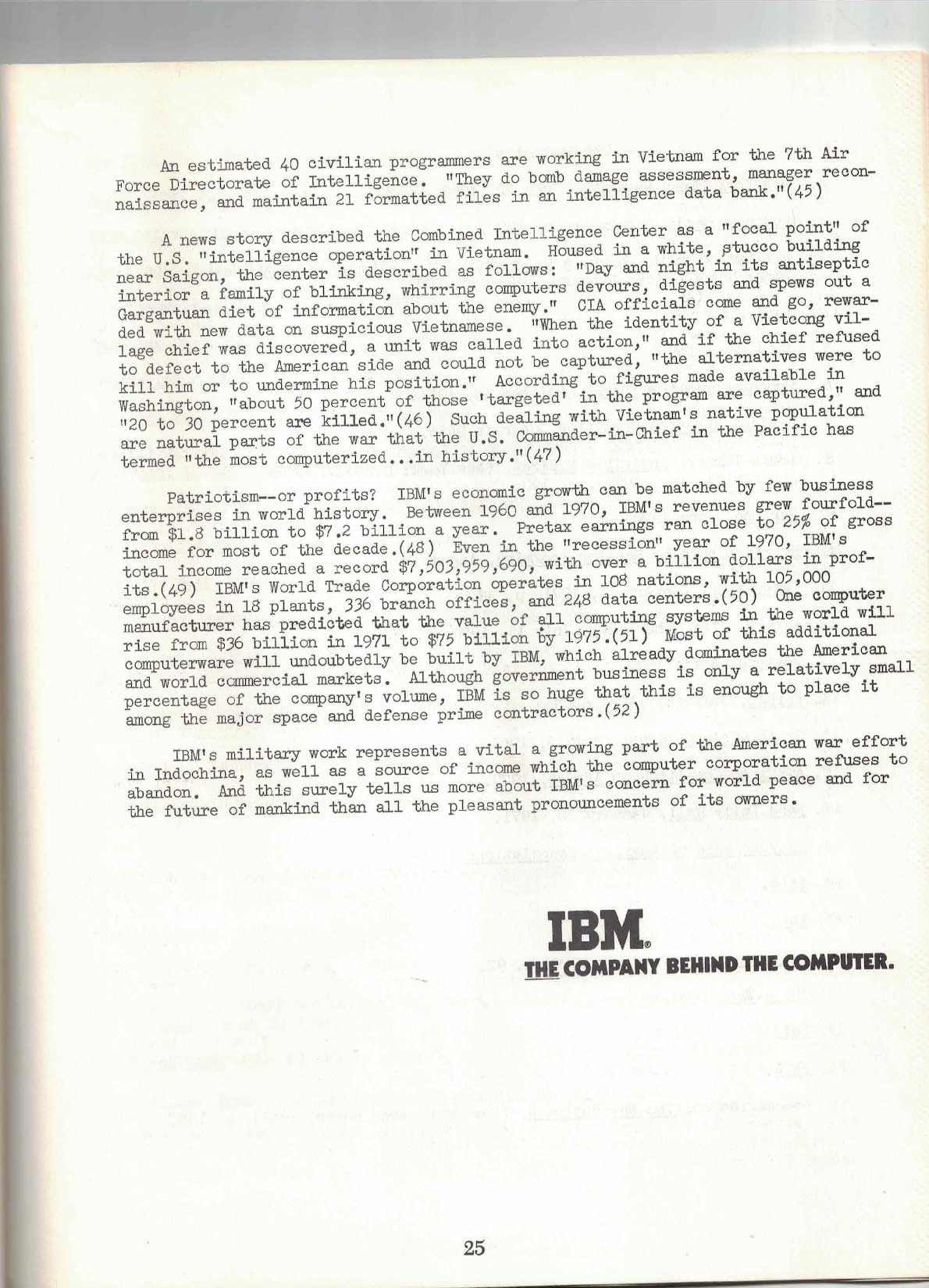
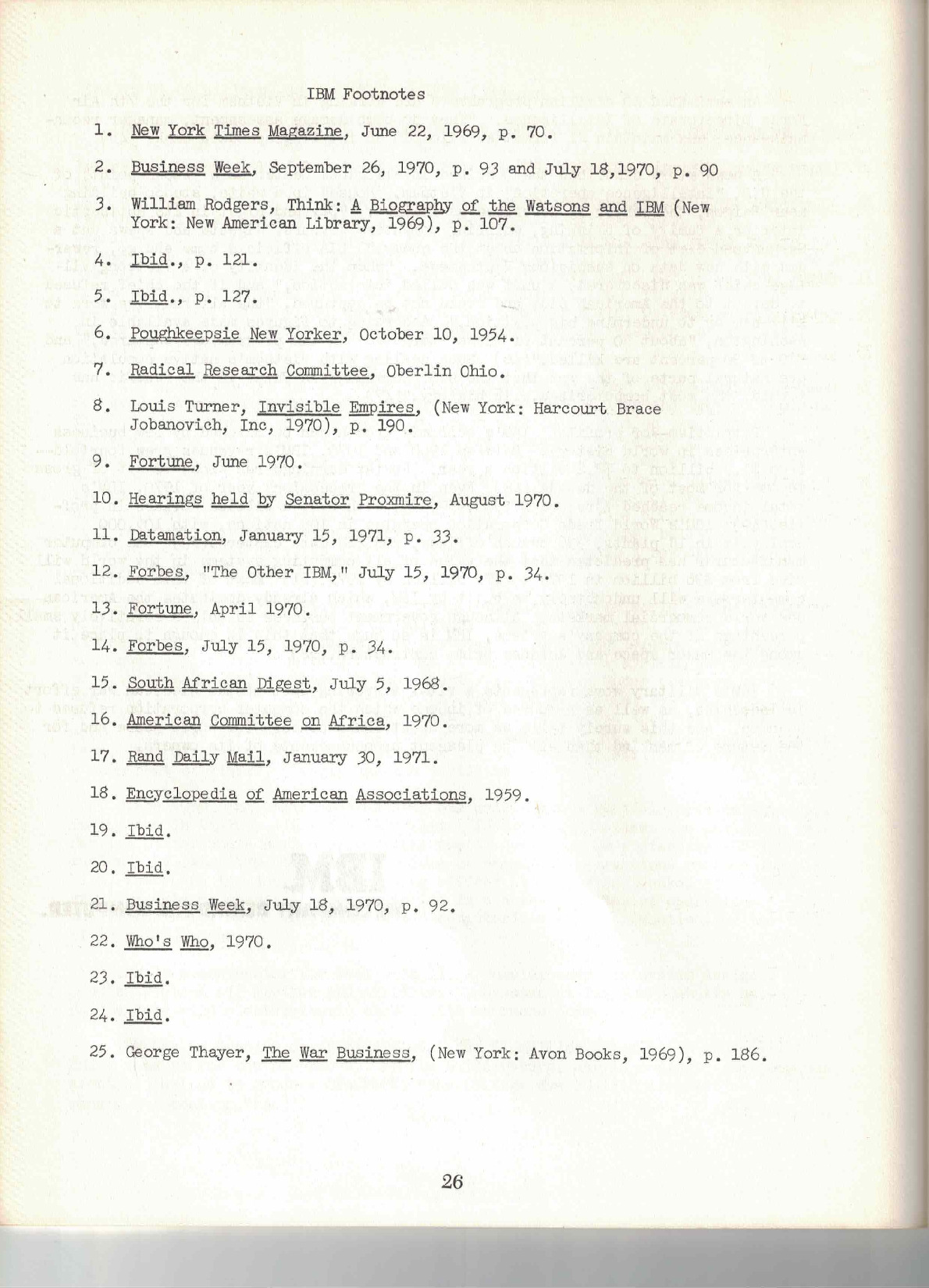
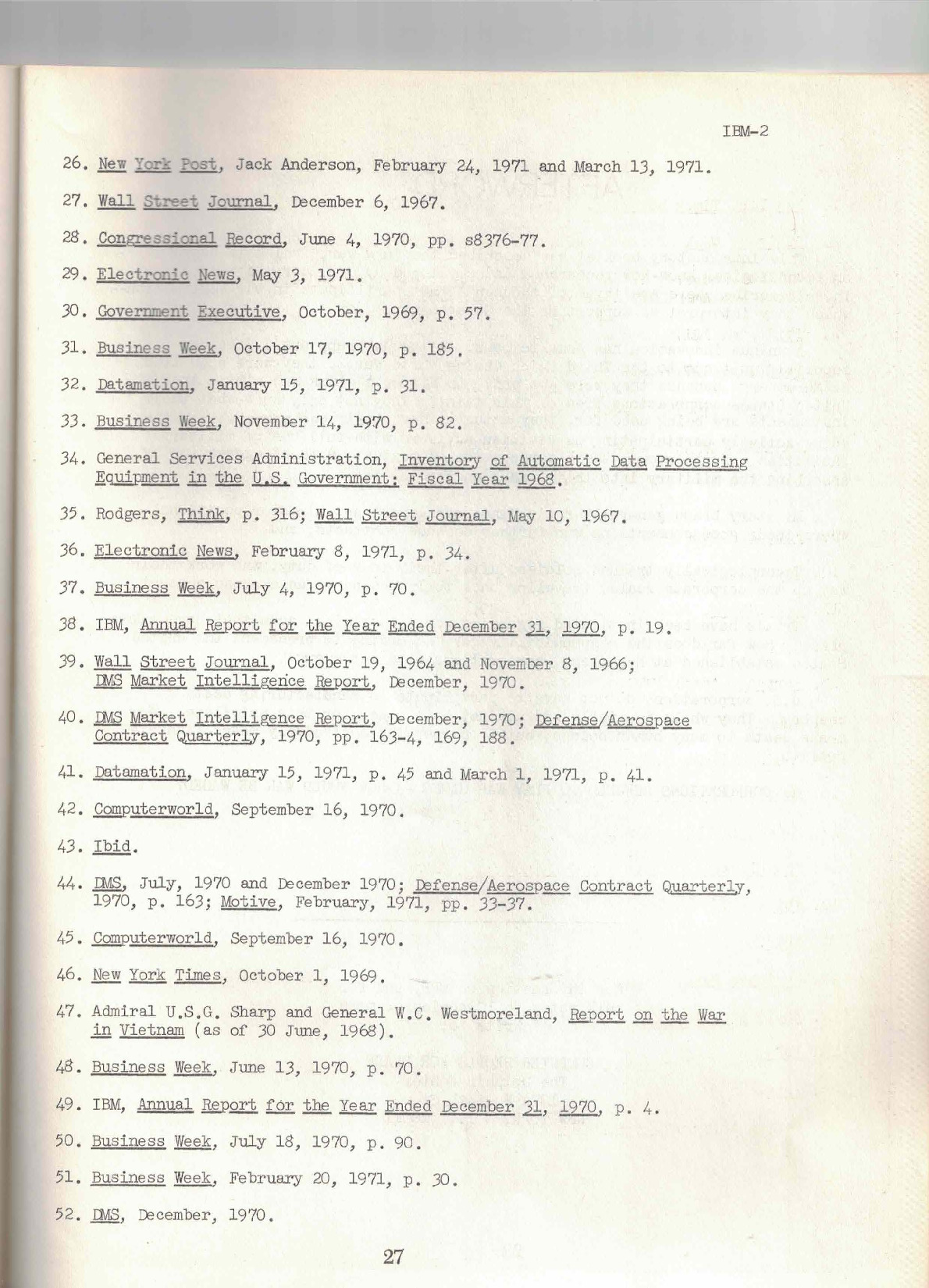
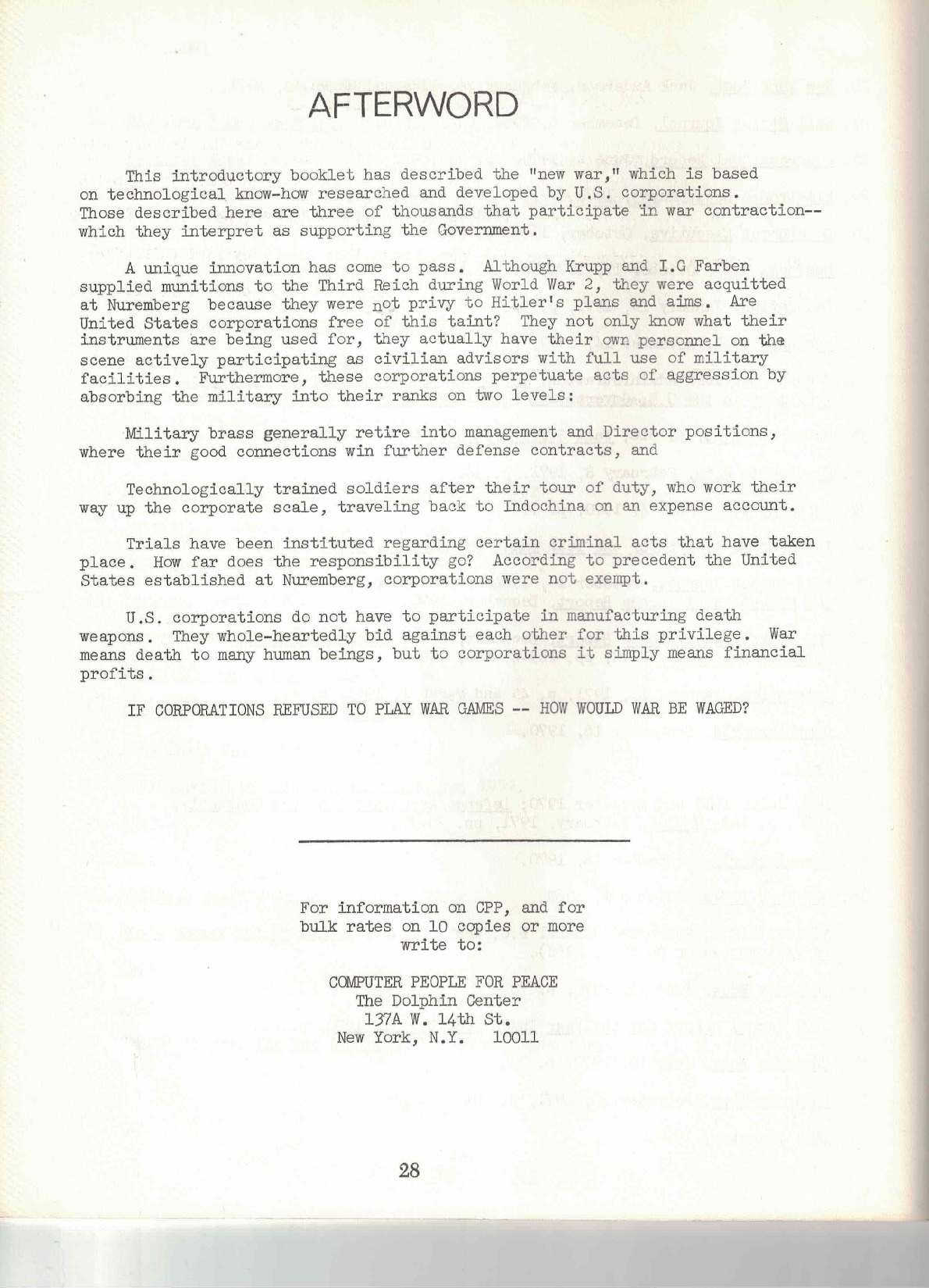
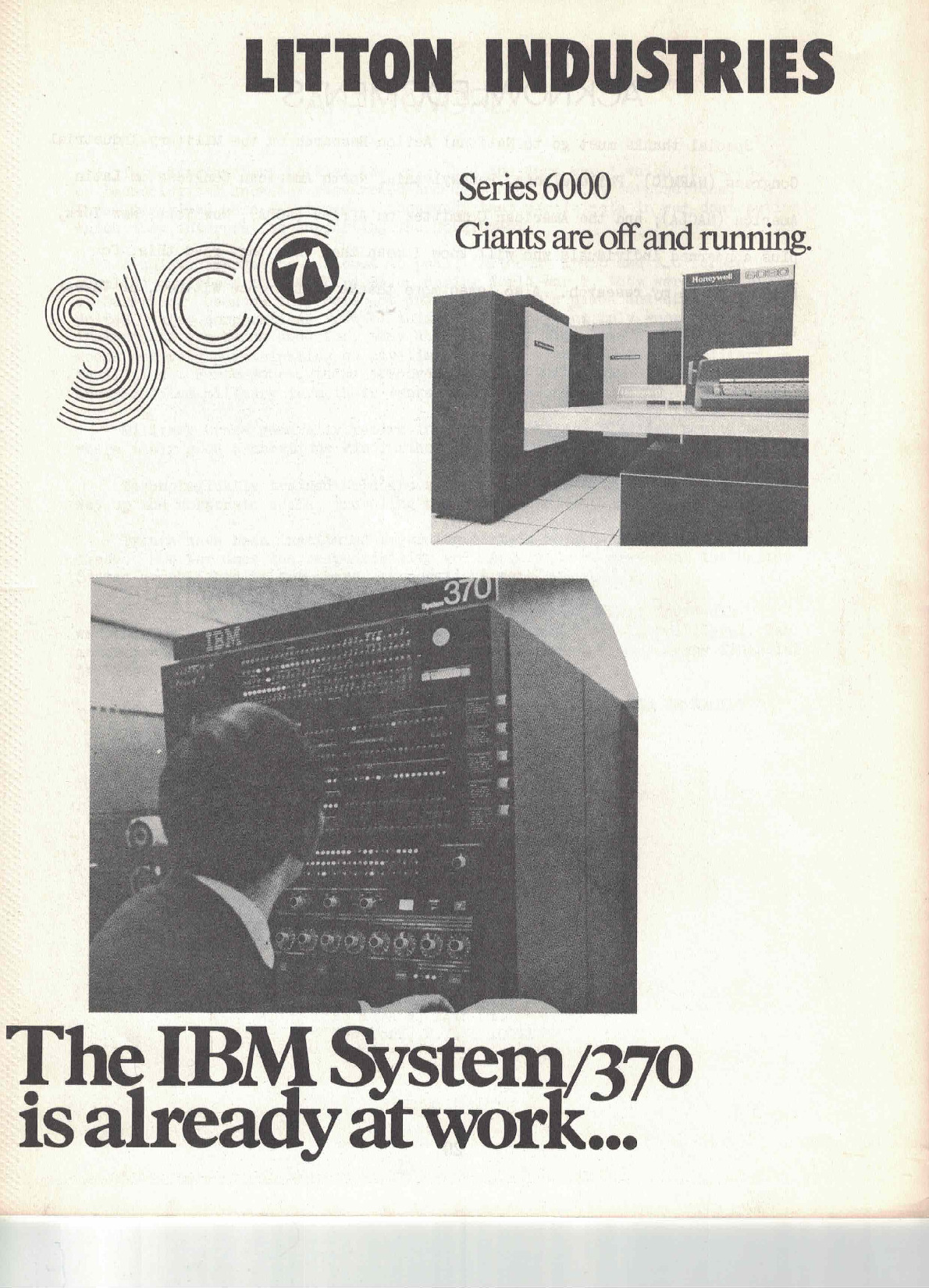
In addition to their political actions, CPP produced texts for computer workers and a lay audience of non-technologists that laid out the connections between computer work and the under-explored negative consequences for Americans subject to these large and growing technological systems. CPP published a newsletter for members called INTERRUPT, as well as pamphlets geared to a broader audience that tried to explain the risks and downsides that came with greater computerization. One pamphlet published in 1971, »The Technological Warlords« (by Ann Rosenberg) took to task computing companies that all too often were perceived as vending neutral office automation systems, showing how intimately connected they and their products were with the interests of the US government and Department of Defense in particular. The first chapter, »Electronic Battlefield – Automated Murder« set the tone. Another pamphlet from 1971, prepared by Dave Kotelchuck, was called »Health: Big Business for Computers« and it laid out the problems of computerization within the healthcare system, showing that this change was not necessarily efficient or beneficial for people’s health. The first page notes that »health is no more a priority of the American health industry than safe, cheap, efficient, pollution-free transportation is a priority of the American automobile industry.«5
CPP also submitted testimony to Congress in 1971, in the context of hearings on federal data banks.6 CPP was concerned with the privacy and civil rights implications of these growing federal databases – they understood that new ways of thinking about data were needed to protect people who did not use or work with computers, but whose rights were nonetheless being eroded by these large systems of datafication, bureaucracy, and surveillance. In another action, they attempted to raise bail for Clark Squire, a fellow tech industry worker who was brought up on conspiracy charges for being a member of the Black Panthers (he was eventually acquitted, but ended up serving two years in jail awaiting trial due to excessive bail).7
And within their industry they tangled with other professional organizations like the Association of Computing Machinery (ACM) to try to start a dialogue about how to be an ethical and conscientious computer programmer within a system that did not necessarily value that. A CPP press release in 1970 criticized the ACM conference, arguing that »the aim of the conference seems to be to reduce society’s problems to a set of technical difficulties,« and warning that the ACM »is asking the wrong set of questions. They are asking how to manage or extend certain existing institutions instead of asking why these institutions exist, or whose needs they serve.«8
CPP exemplified the double bind many computer workers were in – and continue to be in today. It showed how the very thing that gave »computer people« power to potentially create positive change was their proximity to infrastructures of harm. Without this proximity –indeed, without participating in these harmful systems to some extent – they would not have the same level of access, authority, or cultural prestige when speaking out about these issues.
In many ways, CPP were far ahead of their time in seeing clearly the problems that ever-increasing computerization was starting to cause, and likely to cause in the future, for democratic societies. Indeed, most were seeing this from their compromised perch within the very industry doing the damage. CPP presents a hopeful example of early tech worker activism, a beacon to historians and journalists who wish to look back further into the past to understand the present moment of tech worker activism. Many of the concerns raised by CPP – from digital rights to the entanglements of computers and empire – remain major, unresolved problems. As tech workers in Silicon Valley and around the globe increasingly organize to protest against the use of their skills for ends that they find objectionable or immoral, the words of CPP in 1968 seem all too resonant:
»We are propping up a corrupt and tyrannical regime … Our taxes are devoted to destruction abroad instead of being used for construction at home …. We, as computer professionals, wish to contribute to the creation of a world in which the constructive potential of our skills can be fully realized for the betterment of mankind. We wish to improve the quality of human life by using computers to solve problems of hunger and deprivation, not to implement more sophisticated weapons systems destructive to human life.«9
Footnotes
-
1
»We Will Not Program Death,« Correspondence and Ephemera, 1969-1971, Box 1, Folder 3 (Material Type: Mixed Materials) in the Joan Greenbaum, Julie Millstein, and Paul Millstein Collection on Computer People for Peace (1968-1978) TAM.828, NYU Special Collections Library.
-
2
Edmund C. Berkeley, Editorial: The Misdirection of Defense – and the Social Responsibilities of Computer People, in: Computers and Automation, April 1969 (published by Berkeley Enterprises, Newtonville, Massachusetts),Correspondence and Ephemera, 1969-1971, Box 1, Folder 3, TAM.828 (NYU).
-
3
»Computer Professionals for Peace (CPP) Are Programming a Computer to Produce Voting Lists to Aid Peace Candidate Campaigns,« notice published in: Computers and Automation, July 1968 (published by Berkeley Enterprises, Newtonville, Massachusetts), Correspondence and Ephemera, 1969-1971, Box 1, Folder 3, TAM.828 (NYU).
-
4
»We Will Not Program Death,« Correspondence and Ephemera, 1969-1971, Box 1, Folder 3, TAM.828 (NYU).
-
5
INTERRUPT newsletter, 1968-1973, Box 1, Folder 5, TAM.828 (NYU); Ann Rosenberg, »The Technological Warlords,« 1971, archived on the Hack Manhattan Wiki, https://wiki.hackmanhattan.com/images/8/83/CPPWarlords.pdf; Dave Kotelchuck, »Health: Big Business for Computers,« 1971, archived on the Hack Manhattan Wiki, https://wiki.hackmanhattan.com/images/b/b1/CPPHealth.pdf.
-
6
United States. Congress. Senate. Committee on the Judiciary. Subcommittee on Constitutional Rights. (1971). Federal data banks, computers, and the Bill of Rights: hearings ... Ninety-second Congress, first session. Washington: U.S. Govt. Print. Off. pp. 931-933.
-
7
Computer People for Peace, »Clark Squire and the Panther 21,« 1971, archived on the Hack Manhattan Wiki, https://wiki.hackmanhattan.com/images/f/f7/CPPClarkSquire.pdf.
-
8
Press Release (August 31, 1970), Correspondence and Ephemera, 1969-1971, Box 1, Folder 3, TAM.828 (NYU).
-
9
»Computer Professionals for Peace (CPP) Are Programming a Computer to Produce Voting Lists to Aid Peace Candidate Campaigns,« in: Computers and Automation, July 1968, Correspondence and Ephemera, 1969-1971, Box 1, Folder 3, TAM.828 (NYU).
License